




Here's something I hear all the time: "I've tried everything for my sleep — I go to bed at the same time every night, I avoid screens, I've got blackout blinds. Nothing works."
And then I ask: "But what's your stress like?"
Silence.
Most sleep advice focuses on sleep hygiene — the room temperature, the routine, the screen curfew. And those things matter, to a point. But if you're lying in bed with your cortisol elevated and your nervous system in low-level fight-or-flight mode, no amount of lavender pillow spray is going to fix it. You're trying to address the output without touching the input.
Before I go any further: I'm not a scientist or a GP. I built Sentro Labs because I couldn't sleep and needed to fix it myself. Everything I share here is based on the research I've done and what's worked for me personally. If you're dealing with serious or persistent sleep issues, please talk to your doctor.
Quick answer: how to sleep when stressed
Stress can keep your nervous system alert and make it harder to fall or stay asleep. A consistent wind-down routine, addressing stress during the day, and getting personalised advice from a GP or pharmacist are sensible first steps. Some people also consider supplements such as L-Theanine or magnesium, but evidence and suitability vary, so check they are appropriate for you before taking them.
The scale of the problem — and why nobody talks about the real cause
Here's a stat that didn't surprise me at all when I found it: 54% of adults say stress and anxiety are the primary reason they can't fall asleep. Not noise. Not light. Not caffeine. Stress. And yet the conversation around sleep fixes almost always starts with mattresses and melatonin.
In Ireland, 10.4% of adults reported experiencing depression in the past 12 months, with the 35–44 age group hit hardest at 14.2%. Stress, anxiety and sleep are deeply intertwined — and when one starts unravelling, the others tend to follow.
The reason standard sleep hygiene advice misses the mark for stressed people is biological. When you're anxious, your body produces cortisol — the alertness hormone. Cortisol is supposed to be high in the morning and taper off through the day, reaching its lowest point around midnight. Chronic stress scrambles this pattern. I've written about the cortisol-sleep connection in detail in this post — but the short version is: elevated evening cortisol keeps your brain in a state of low-level alert. Your wind-down routine is fighting uphill against that every single night.
You can have a perfect bedtime routine and still lie awake for an hour because your body thinks it needs to stay vigilant. That's not a sleep problem. That's a stress response problem showing up at bedtime.
The ingredient I think is most underused for stress-related sleep
Honestly? L-Theanine.
L-Theanine is an amino acid found naturally in green tea. What it does — and the research on this is solid — is promote alpha brain wave activity. Alpha waves are the mental state you're in when you're calm but still present. Not drowsy, not foggy, not sedated. Just settled. It takes the edge off mental noise without knocking you out.
A 2025 systematic review looked at 13 clinical trials on L-theanine and sleep — over 550 participants — and found meaningful benefits across sleep latency (how long it takes to fall asleep), sleep maintenance, efficiency, and how refreshed people felt on waking. That's a fairly comprehensive picture for one ingredient.
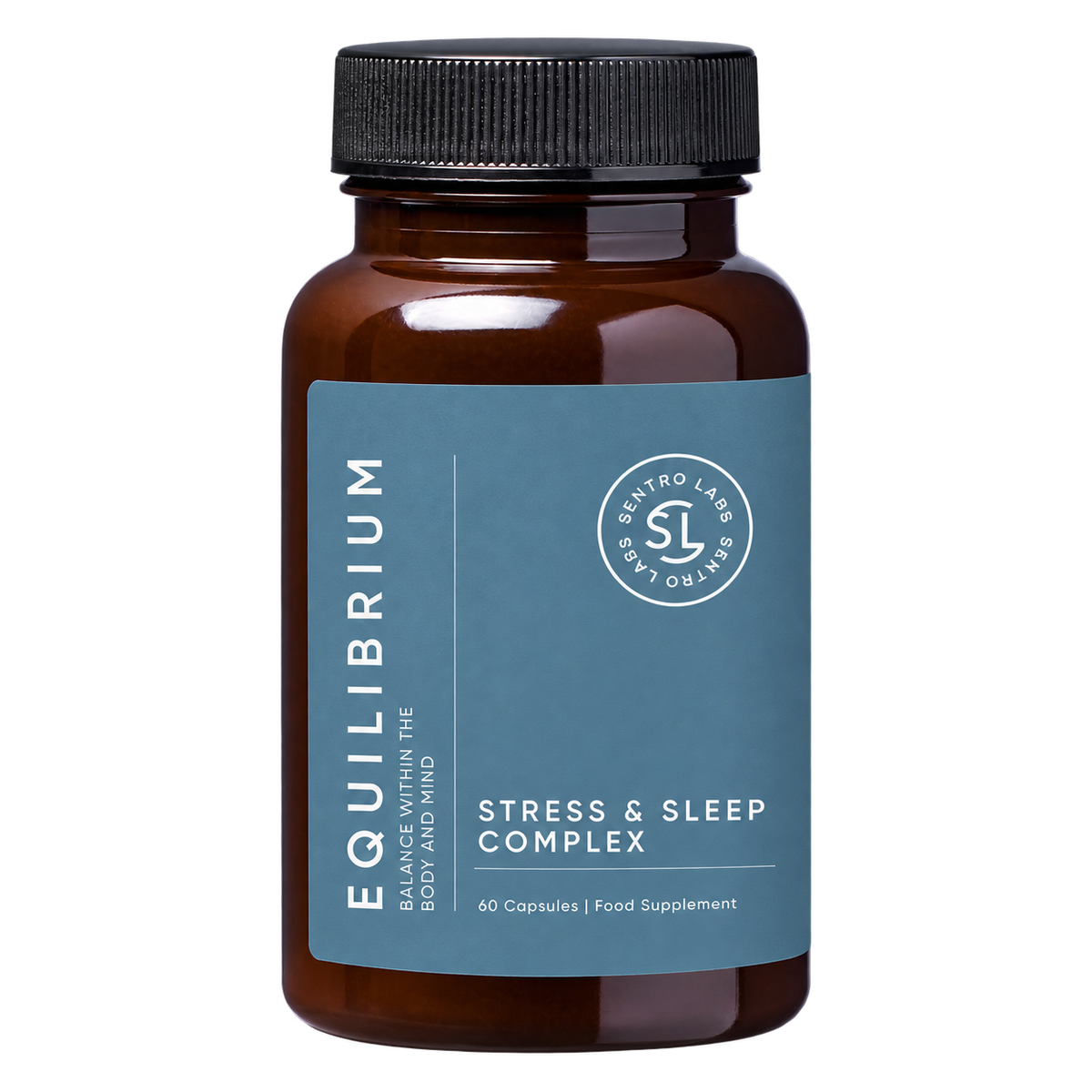
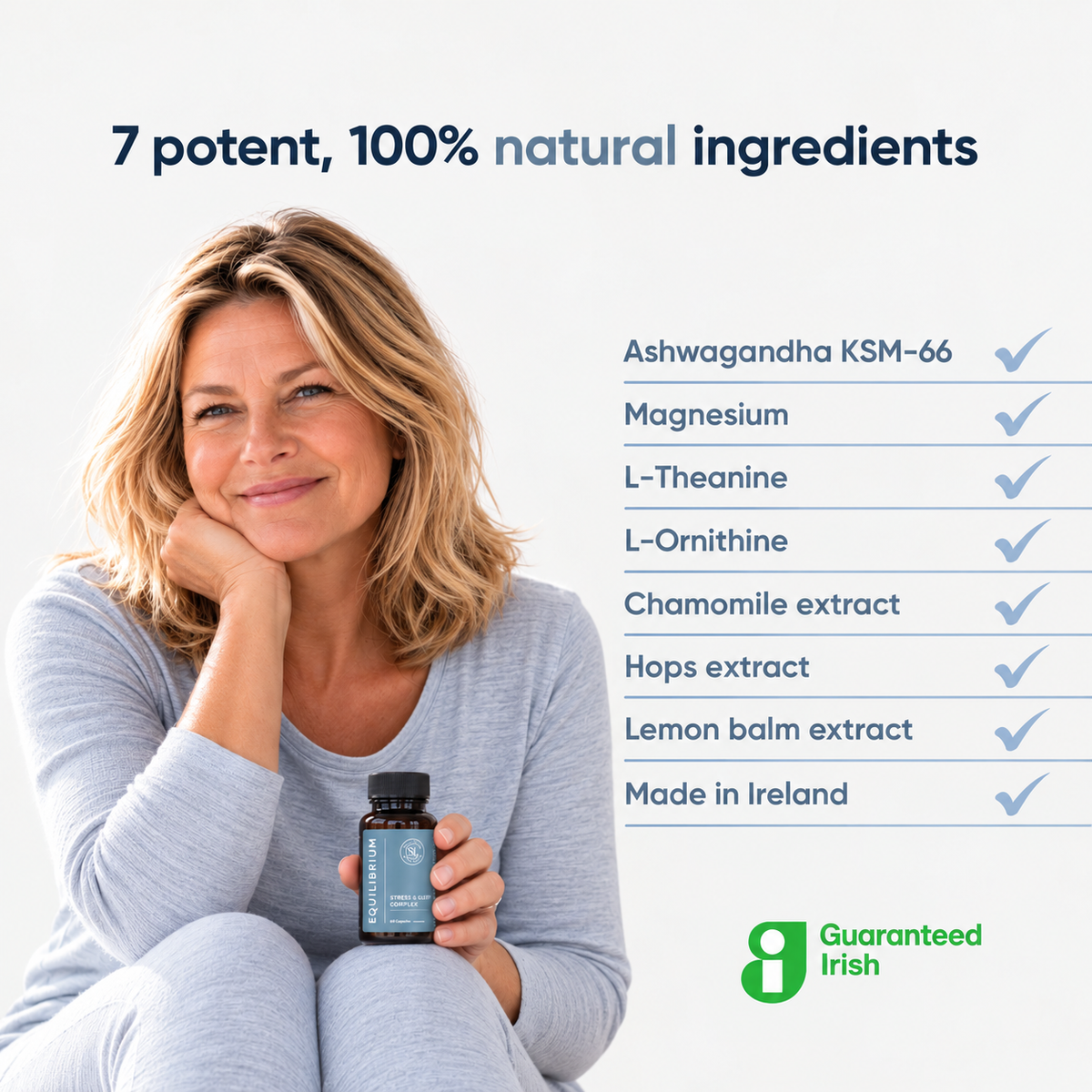
This is exactly why L-Theanine was one of the first things I put in Equilibrium. I pair it with Ashwagandha KSM-66 — which works on the cortisol side of the equation over time (more on what ashwagandha actually does to stress hormones in this piece) — and Magnesium Glycinate, which supports the nervous system and helps the body physically relax. It's not one ingredient carrying everything. It's the combination that makes it work.
How I'd actually approach this
If your sleep problems are stress-driven, I'd work the problem from two angles at the same time.
Address the cortisol over time. Ashwagandha — specifically KSM-66, the clinically studied extract — has good evidence for reducing cortisol with consistent use. It's not fast. Think 4–6 weeks before you notice a real shift. But it genuinely moves the baseline. I take Equilibrium every day and have done for a couple of years now. The difference between how I sleep in high-stress periods now versus before I started is significant.
Address the moment. L-Theanine works relatively quickly — within 30–60 minutes for most people. Taking it in the evening, about an hour before bed, is when I find it most useful. It's not a sleeping pill. It just removes the mental friction between you and sleep.
And underneath all of it: magnesium. If you're chronically stressed, you're burning through magnesium faster than you're replacing it. Magnesium is involved in regulating GABA — the neurotransmitter that tells your brain to calm down — and it plays a direct role in muscle relaxation and nervous system function. I take Magnesium Bisglycinate separately every night on top of what's in Equilibrium, because for people with stress-related sleep issues, I think the dose matters.
The thing I want to push back on is the idea that you can fix stress-related insomnia with a routine tweak alone. You can't. You need to give your nervous system actual nutritional support. The routine helps once the underlying biology has something to work with.
FAQ — Stress, Anxiety and Sleep
Can stress cause insomnia?
Yes — and it's one of the most common causes. Stress elevates cortisol, which is a wakefulness hormone. Elevated evening cortisol keeps your brain in a state of alert when it should be winding down. Over time this creates a loop: poor sleep increases stress hormones, which further disrupts sleep. Breaking the cycle is the whole point.
What helps you sleep when you're anxious?
In my experience: L-Theanine about an hour before bed, magnesium in the evening, and addressing the cortisol problem consistently over time with ashwagandha. The breathing exercises and journaling advice isn't wrong — but alone, it's not enough when your stress hormones are chronically dysregulated.
How long does L-Theanine take to work for sleep?
Most people feel it within 30–60 minutes. It's one of the faster-acting natural supports for sleep. The benefit also compounds with consistent use — taking it regularly as part of an evening routine works better than reaching for it only on the worst nights.
Does magnesium help with anxiety and sleep?
Yes, and the mechanism is fairly well understood. Magnesium supports GABA production — GABA is the main calming neurotransmitter in the brain. Low magnesium is associated with higher anxiety and poorer sleep quality. Magnesium Glycinate and Bisglycinate are the best-absorbed forms for nervous system support.
Is it safe to take ashwagandha, L-Theanine and magnesium together?
Based on the research and my own two-plus years of taking this combination: yes. They target different aspects of the stress-sleep problem — ashwagandha works on cortisol over time, L-Theanine calms the mind in the moment, and magnesium supports the nervous system at a cellular level. That's exactly the stack I built into Equilibrium, with Magnesium Bisglycinate as a separate supplement for higher-dose support.
Ready to break the stress-sleep cycle?
If this sounds familiar — lying awake with a busy brain, waking in the night, never feeling properly rested even after a full night — the 90-Day Sleep Ritual is where I'd start. It combines Equilibrium and Magnesium Bisglycinate over a full season, because resetting a chronic stress-sleep pattern takes time. A supplement taken twice and abandoned won't shift something that's been building for months.
90 days is the minimum I'd give it. The people who come back and tell us it changed things are almost always the ones who stayed with it.
— Elaine










Share:
Why Does My Sleep Get Worse Every Autumn? (It Might Be Your Vitamin D)