




I get this question so often — usually sometime between September and November, when the messages start coming in saying things like: "My sleep was grand all summer and now it's fallen off a cliff. What's going on?"
Before I get into it, I want to be upfront: I'm not a scientist or a GP. I built Sentro Labs because I couldn't sleep and needed to fix it myself. Everything I share here is based on the research I've done and what's worked for me personally. If you're dealing with serious or persistent sleep issues, please talk to your doctor.
Right. Back to the question.
"Is my vitamin D affecting my sleep?"
Honestly — yes. Probably.
What vitamin D actually does in your brain
Here's the thing that surprised me when I started looking into this: vitamin D isn't just about bones and teeth. It plays a direct role in the parts of your brain that regulate sleep. Specifically, there are vitamin D receptors in the hypothalamus — which is essentially your body's clock. When vitamin D is low, your ability to produce melatonin (the hormone that signals it's time to sleep) gets disrupted. Your sleep latency — how long it takes to fall asleep — increases. Your deep sleep decreases.
And in Ireland, most of us are low. Not slightly low. Significantly low.
Research on vitamin D status in Ireland consistently shows that around 12% of the population — roughly 500,000 people — are clinically deficient year-round. In winter, that figure jumps to nearly 25%. We're at 53 degrees latitude. Between October and March, the sun doesn't even get high enough in the sky for our skin to synthesise vitamin D at all. None. Zero. Even if you're out walking every day in January, your body can't make it.
A 2025 study published in Frontiers in Nutrition found that people with both vitamin D deficiency and sleep disorders had significantly worse health outcomes than those with just one or the other — suggesting these two things interact and compound each other. That didn't surprise me at all. I've seen it play out too many times in my own patterns, and I hear it constantly from customers.
The autumn sleep slump is real — and it's not in your head
This is the thing I wish more people knew: vitamin D is fat-soluble, meaning your body stores it from summer sun exposure. Those stores typically start running low in September or October. Which is exactly when people start messaging us saying their sleep has deteriorated for no obvious reason.
It's not nothing. It's not always stress (well, sometimes it's stress — I wrote about the cortisol piece of the puzzle in this post on cortisol and sleep). It's not that you suddenly need a new mattress. Your body may literally be running out of a key nutrient it needs to regulate your sleep cycle.
And vitamin D and cortisol are actually connected. When vitamin D drops, cortisol dysregulation tends to follow. They're part of the same hormonal conversation your body is constantly trying to have.
What I actually do about it
I started taking vitamin D seriously a few winters ago — not because I was following some wellness trend, but because I was desperate. I'd done everything else right: dark room, magnesium every night (I take our Magnesium Bisglycinate — has done for two years now), no caffeine after midday, consistent bedtime. But every October, I'd hit a wall.
Adding a good vitamin D3 supplement — with K2, which helps with absorption — genuinely made a difference for me. It's not instant. Took a few weeks to feel it. But by December, I wasn't collapsing the way I had been in previous years.
This is exactly why I put 25µg of vitamin D3 — that's 500% of the NRV — plus K2 into our BioResilience daily powder. I wanted to cover this gap properly, not with some token amount that wouldn't move the needle. The K2 is in there specifically to support absorption and make sure the vitamin D is actually doing what it's supposed to do.
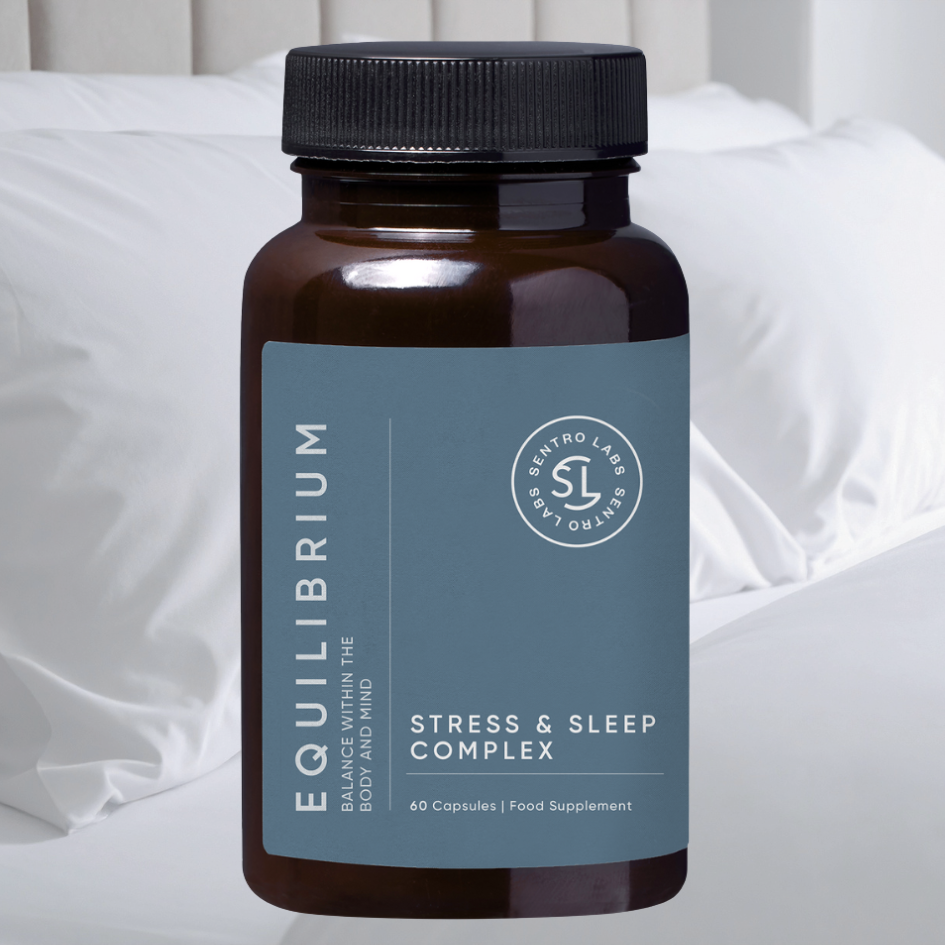
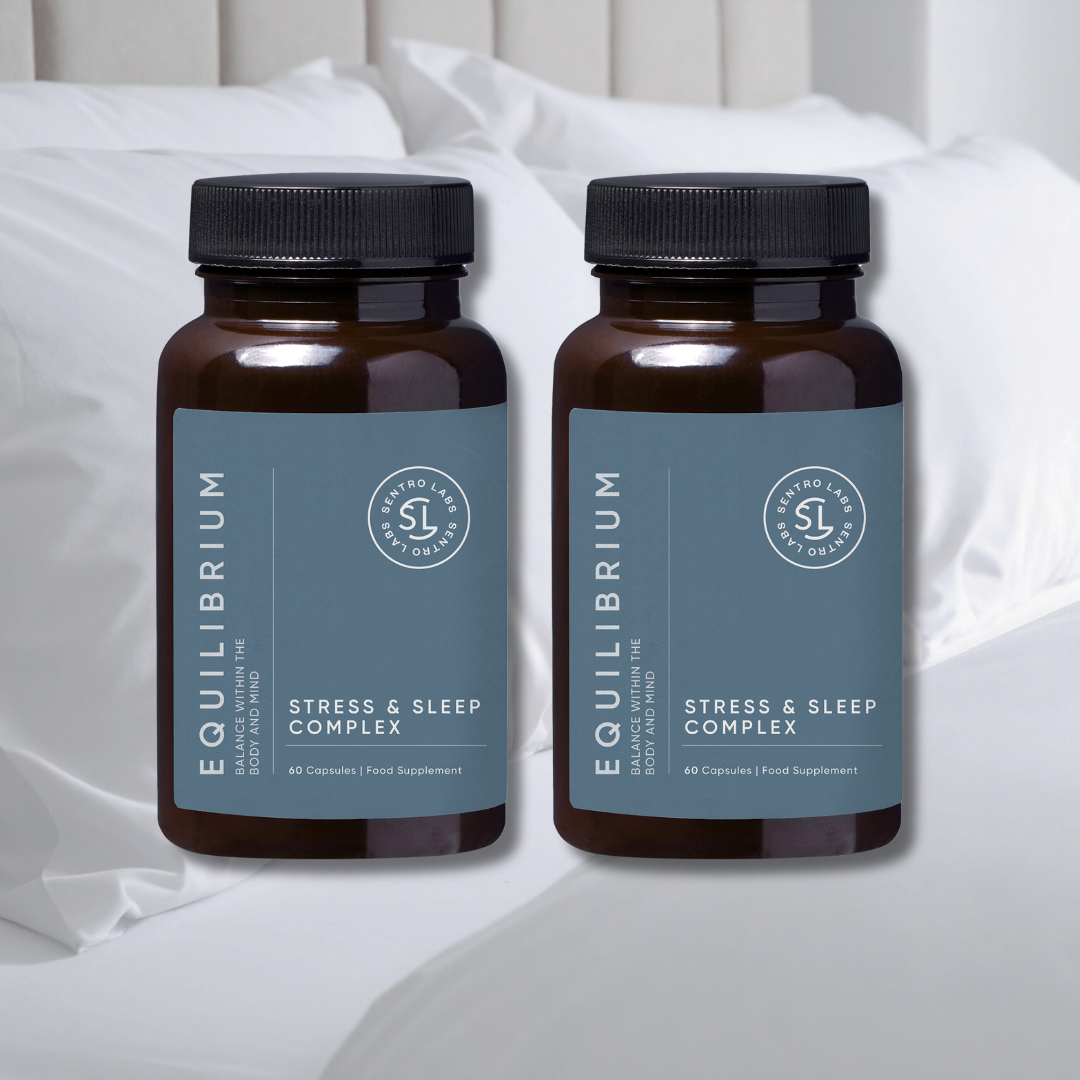
If sleep is your primary concern this autumn, I'd pair BioResilience with Equilibrium — our Stress & Sleep Complex with Ashwagandha KSM-66, Magnesium Glycinate, and L-Theanine. That combination covers the nervous system side of things while the vitamin D works on the deeper circadian regulation piece.
Practical: how to take vitamin D for sleep
A few things worth knowing here:
Take it in the morning, not at night. Vitamin D plays a role in cortisol patterns and alertness — taking it at night can actually work against you. Take it with your morning meal.
Take it with food that has fat in it. That's how fat-soluble vitamins absorb. Coffee on an empty stomach doesn't count.
D3, not D2. D3 (cholecalciferol) is the form your skin would naturally make from sunlight. It's significantly more bioavailable than D2. A D3+K2 combination is what you want — the K2 helps direct calcium to where it's supposed to go.
Get tested if you can. It's a simple blood test — ask your GP to check your 25(OH)D levels. The Food Safety Authority of Ireland recommends 10–25 micrograms (400–1,000 IU) daily for adults, but many practitioners recommend higher doses for confirmed deficiency through winter. Your doctor will advise based on your results.
FAQ — Vitamin D and Sleep: The Questions I Get Asked
Does low vitamin D cause insomnia?
It can contribute to it. Vitamin D receptors in the brain — particularly in the hypothalamus — play a role in regulating your sleep-wake cycle. Low vitamin D has been associated with reduced sleep quality, difficulty falling asleep, and less time in deep sleep. It's rarely the only factor, but in Ireland, where deficiency is so common, it's one that gets overlooked far too often.
Why does my sleep get worse in autumn and winter in Ireland?
Almost certainly because your vitamin D stores are dropping. Your body builds up vitamin D from sun exposure during summer. By September, those stores are starting to deplete. Between November and March, Ireland's latitude means your skin can't make vitamin D from sunlight at all — the UV index simply isn't high enough. Supplementing from September through April is something I'd recommend to almost anyone living here.
How long does it take for vitamin D to improve sleep?
Based on the research and my own experience, expect 4–8 weeks of consistent supplementation before you notice a meaningful change. Vitamin D builds up gradually in the body. It's not a quick fix — but it's a real one.
Should I take vitamin D with magnesium?
Yes — and this is something I feel quite strongly about. Magnesium plays a role in converting vitamin D into its active form in the body. If you're magnesium-deficient, you may not be absorbing vitamin D properly regardless of how much you take. This is why I always say: vitamin D in the morning, magnesium at night. That pairing covers a lot of ground. If you want to go deeper on what magnesium actually does for sleep and the nervous system, I wrote about it here.
Can vitamin D deficiency cause night sweats or waking during the night?
There's no direct established causal link, but vitamin D deficiency is associated with hormonal disruption — and hormonal disruption can contribute to night sweats, broken sleep, and restlessness in anyone. If you're waking in the night for no obvious reason, low vitamin D is absolutely worth ruling out as part of the picture.
Sort your sleep before winter hits
If you're already starting to notice the seasonal shift — slower to fall asleep, waking in the night, unrested in the morning — September is the ideal time to get ahead of it. Not December, when you've already lost three months of good sleep.
Our 90-Day Sleep Ritual runs from now through to December — combining Equilibrium and Magnesium Bisglycinate across a full season to give your nervous system the sustained support it needs. It's not a quick fix. It's a reset.
Start now. Your February self will thank you.
— Elaine











Share:
Does Alcohol Help You Sleep? What the Science Actually Says