



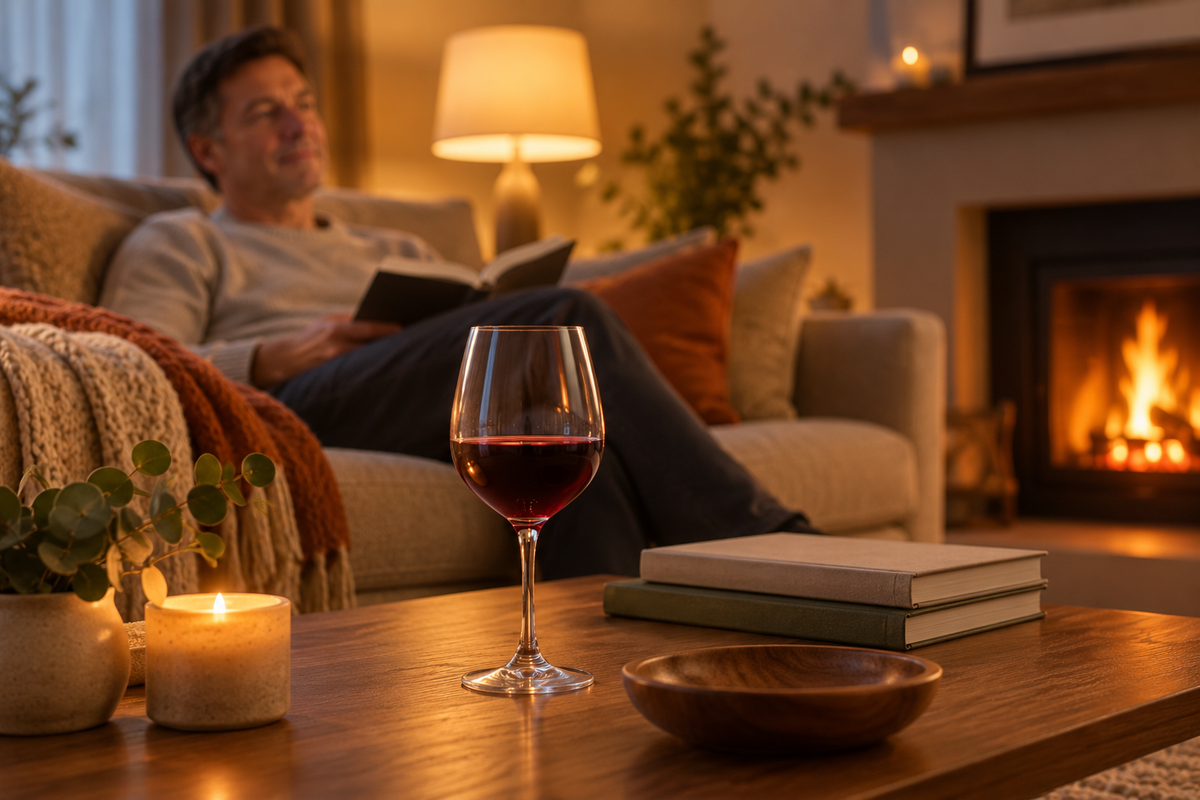
I used to have a glass of wine most evenings. Sometimes two. I told myself it helped me relax after a long day — and honestly, it did. I'd feel that lovely heavy-eyed feeling around 10pm and think, great, I'll sleep well tonight. Except I wasn't sleeping well. I was waking up at 2 or 3 in the morning, lying there with my heart racing and my brain suddenly wide awake, completely unable to drift back off. I put it down to stress, to having too much on, to just being "a bad sleeper." It took me an embarrassingly long time to connect the dots.
Does Alcohol Help You Fall Asleep?
Honestly? In the short term, yes — and that's exactly what makes it so tricky. Alcohol does help you fall asleep faster. That drowsy feeling is real. I wasn't imagining it. But I came across an article about how alcohol works as a sedative rather than a proper sleep aid, and it genuinely stopped me in my tracks. Sedation and sleep aren't the same thing. When you're sedated, you're unconscious — but your brain isn't doing the repair work it's supposed to do overnight. Think of it like putting your phone on airplane mode instead of actually charging it. You wake up and the battery is still low.
Why Do I Wake Up in the Middle of the Night After Drinking?
This was the thing that finally made everything click for me. I read that as your body processes alcohol and your blood alcohol level drops — usually about 3–5 hours after you fall asleep — your brain sort of bounces back. It goes from suppressed to hyperactive, which pulls you out of deep sleep and into lighter, more fragmented rest. There's a stage of sleep called REM that alcohol apparently suppresses in the first half of the night, and then your brain tries to "catch up" on it in the second half. The result? You end up in this restless, half-awake state right around 2 or 3am. Once I understood this, those 3am wake-ups suddenly made total sense. I've written a bit more about what else can cause those middle-of-the-night wake-ups here, if it sounds familiar: Why Do I Keep Waking Up at 3am? The Cortisol Connection.
What Is Alcohol Actually Doing to My Sleep Quality?
So I started paying more attention. I'd noticed I always felt more groggy after nights I'd had a drink, even when I'd had the same number of hours in bed. I came across a review published in a nutrition journal in 2025 that looked at exactly this, and it confirmed what I was experiencing — habitual alcohol use is linked to poorer sleep quality, more wake-ups during the night, and a higher risk of snoring and sleep-disordered breathing. Apparently alcohol relaxes the muscles in your throat, which is why people snore more after drinking. It also raises your heart rate and body temperature, both of which work against the natural cooling process your body needs to stay asleep. I genuinely had no idea any of this was happening. I just thought I was a bad sleeper.
What Did I Actually Do Instead — and Did It Work?
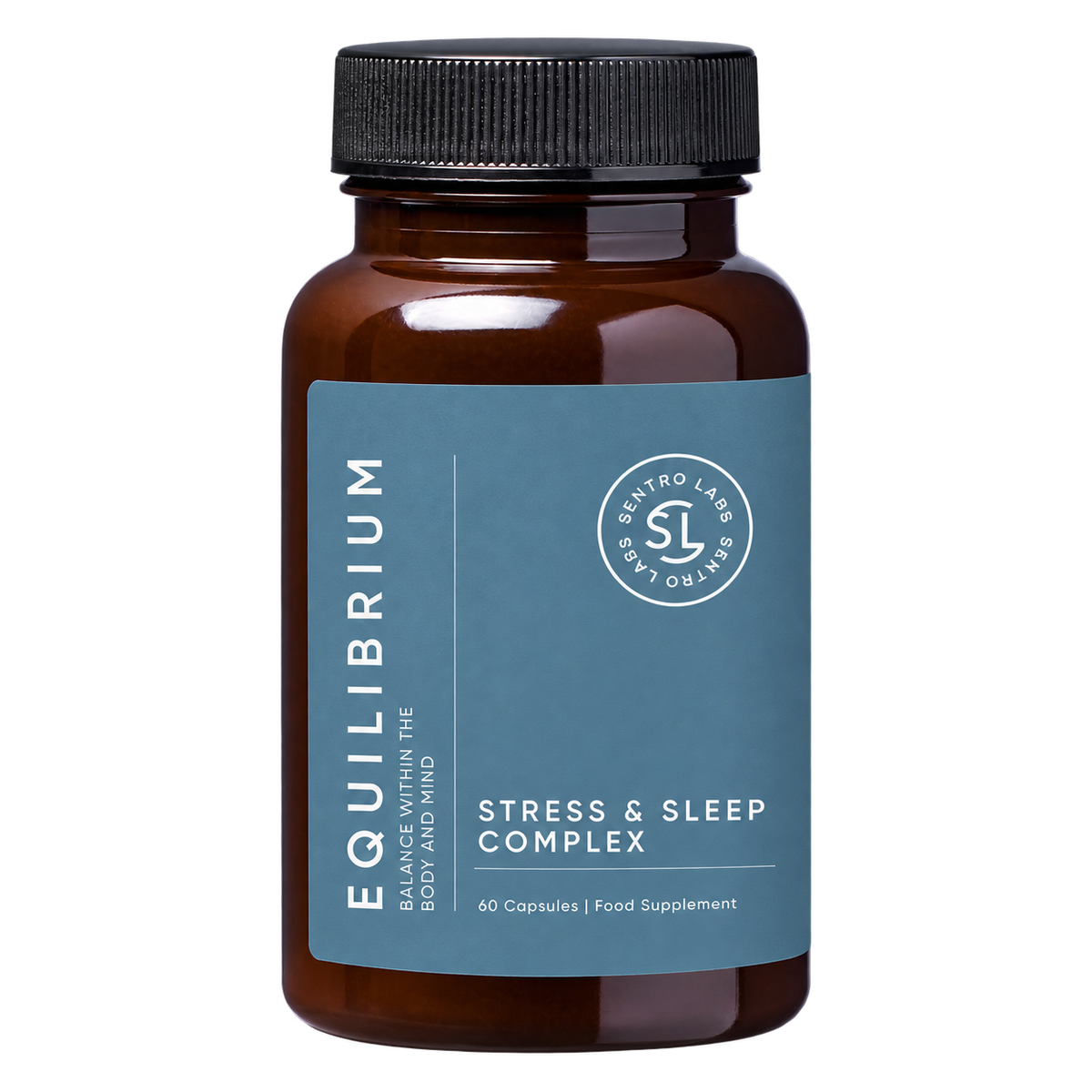
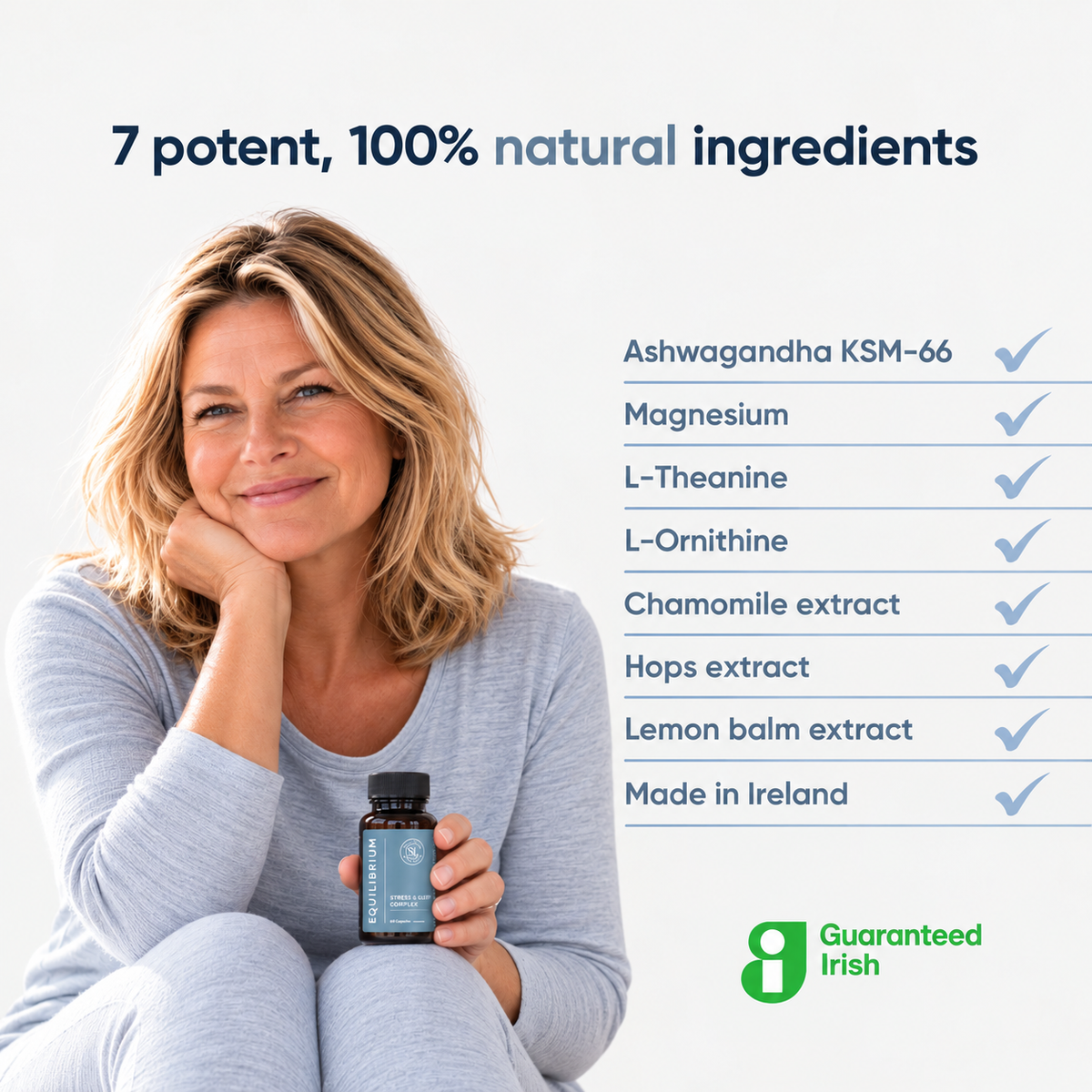
This is the bit I get asked about most, because people aren't just looking to give up alcohol — they're looking for something to replace that wind-down feeling at the end of the day. That evening drink isn't just about the alcohol. It's a ritual. It's a signal that the day is done. I needed something that did the same job without wrecking my sleep. That's actually a big part of why I created Equilibrium. I'd been reading about L-Theanine — an amino acid found naturally in green tea — and how it can promote a calm, relaxed state within about 30 to 60 minutes. Not drowsy, just... settled. Then I started looking into Ashwagandha, specifically the KSM-66 extract, which has been studied for its effect on cortisol and stress. I read one study where participants who took it for 8 weeks had significantly lower cortisol and reported feeling less stressed and more able to sleep. And Magnesium Glycinate — the form that's most easily absorbed — kept coming up in everything I read about sleep and the nervous system. So I put all three together in Equilibrium and started taking it in the evenings instead of pouring a glass of wine. It took a couple of weeks to notice a real shift, but the 3am wake-ups stopped. I started feeling properly rested in a way I hadn't in years. I'm not saying it works like that for everyone, but it worked for me. If racing thoughts at night are part of what you're trying to manage, this might also be useful: How to Stop Racing Thoughts at Night: What the Science Says.
What Small Changes Actually Made a Difference?
I didn't overhaul everything overnight — that never works for me. But a few small shifts made a big difference. The first was just stopping drinking earlier in the evening. I read that your body needs roughly an hour to process each standard drink, and ideally you want alcohol out of your system 3–4 hours before you sleep. That alone changed things. The second was replacing the ritual — keeping the same time, the same wind-down moment, but with a herbal tea or my Equilibrium instead of wine. The third was tracking it. Even just a week of noting how I slept on nights I drank versus nights I didn't was genuinely eye-opening. I was surprised by how obvious the difference was once I actually looked. And I'll say this — I'm not the only one reassessing. Drinkaware Ireland's most recent research found that 36% of Irish adults now say they'd like to drink less often. That's the highest that figure has ever been. So if you've been thinking about it, you're in very good company.
Frequently Asked Questions
Does alcohol help you sleep?
It helps you fall asleep faster, but it disrupts the quality of your sleep once you're out. Alcohol suppresses REM sleep and causes more wake-ups in the second half of the night, so you end up with more hours in bed and less actual rest.
Why do I wake up at 3am after drinking?
As your blood alcohol level drops — usually 3–5 hours after falling asleep — your brain rebounds into a more active state and tries to make up for lost REM sleep. This pulls you into lighter sleep and often wakes you up completely, right around 2–4am.
How much do you have to drink for it to affect your sleep?
Even one to two drinks can measurably affect sleep architecture, particularly REM suppression. The closer to bedtime and the more you drink, the more pronounced the disruption tends to be.
What can I take instead of alcohol to relax at night?
L-Theanine is probably the most well-researched option for that calm-without-drowsy feeling — it works within about 30–60 minutes. Ashwagandha KSM-66 is great for longer-term stress and cortisol support, and Magnesium Glycinate helps calm the nervous system before sleep. These are exactly what I put in Equilibrium.
Does cutting out alcohol actually improve sleep?
Most people notice a real difference within one to two weeks. REM sleep recovers, middle-of-the-night wake-ups reduce, and a lot of people say they feel genuinely rested for the first time in ages. It's one of those things where the evidence is pretty hard to argue with once you experience it yourself.
If you've been using a drink to wind down and wondering if it's affecting your sleep — it probably is, at least a little. That's not a judgement, it's just what I've learned, the hard way. I hope this helps. And if you want to try something different in the evenings, Equilibrium is where I'd start — it's what I reach for now, every night.
This article is for informational purposes only and does not constitute medical advice. Please consult your GP if you are experiencing persistent sleep difficulties.
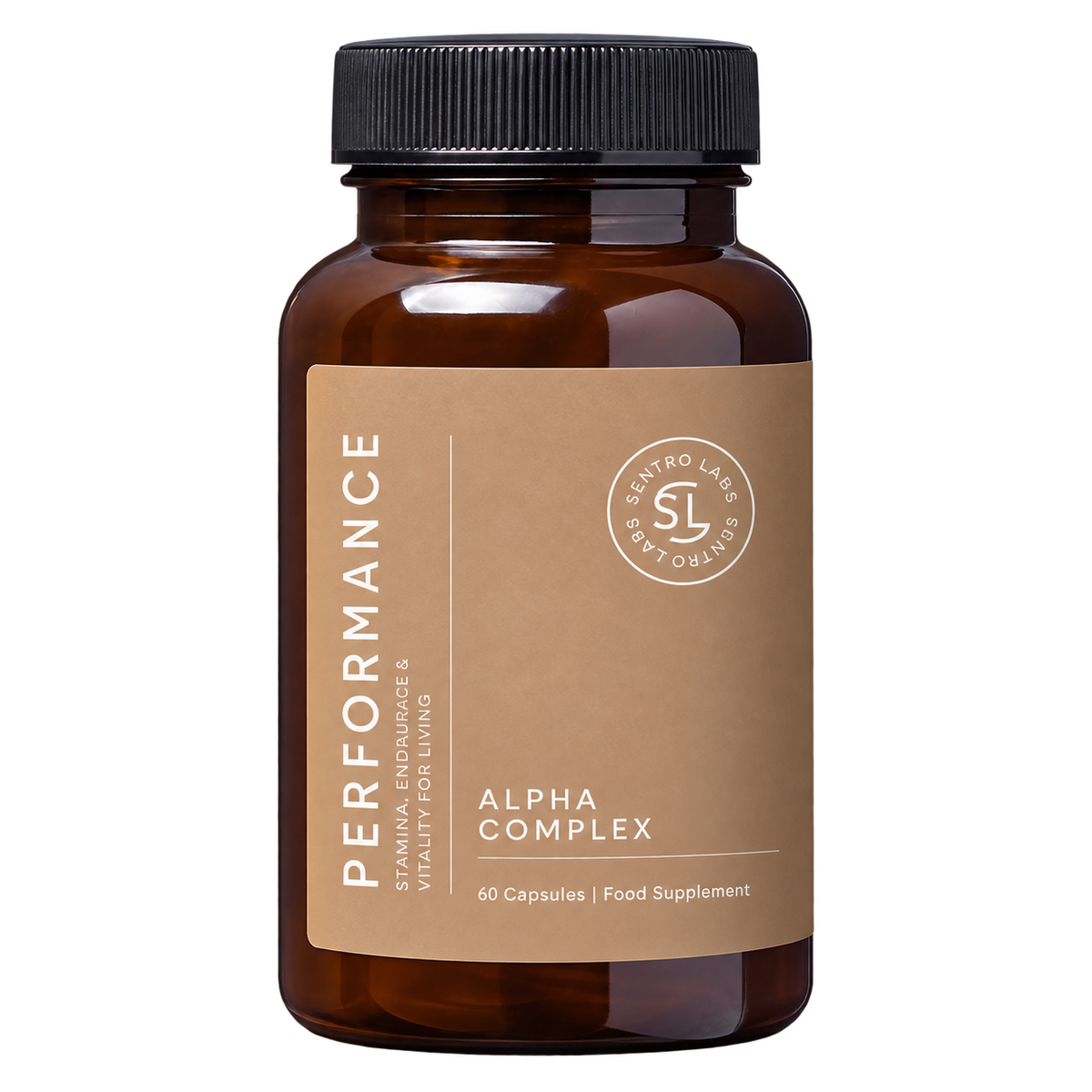
Explore the Sentro Labs Range
- Equilibrium — Stress & Sleep Complex (Ashwagandha KSM-66, L-Theanine, Magnesium Glycinate, Active B-Complex)
- Magnesium Bisglycinate — Sleep & Nervous System Support








Share:
Does Vitamin D Affect Sleep? What Every Irish Adult Needs to Know
Why Does My Sleep Get Worse Every Autumn? (It Might Be Your Vitamin D)