




Nearly 27% of Irish adults wake up more than twice a night — and if you're one of them, you know the particular misery of staring at the ceiling at 3am, mind suddenly racing, wondering why your body has decided that now is the time to be awake. I've been there. It was actually one of the things that pushed me to start Sentro Labs in the first place.
Here's what I've learned: that 3am wake-up isn't random. For a lot of people, it has a biological explanation — and once you understand it, you can actually do something about it.
Why do I keep waking up at 3am?
The most likely reason is a premature rise in cortisol — your body's primary stress hormone. Cortisol naturally begins to climb in the early hours of the morning to help prepare your body for waking. In a healthy sleep cycle, this rise starts gradually around 4–5am and peaks shortly after you get up. But when cortisol is dysregulated — often because of chronic stress, blood sugar instability, or a disrupted circadian rhythm — that rise can begin far too early, jolting you awake hours before your alarm.
Research tracking over 1,200 adults found that 68% of those who reported frequent night waking consistently woke between 2:30am and 4:00am, with 3am being the median wake time. That's no coincidence. This window aligns almost exactly with the early phase of what researchers call the Cortisol Awakening Response. Early Morning Awakening Syndrome — waking between 3:00am and 5:00am with real difficulty getting back to sleep — affects an estimated 15–20% of adults. If this sounds familiar, your cortisol rhythm may be the place to start.
Is high cortisol causing my 3am wake-ups?
Cortisol and sleep have a two-way relationship, and it's a frustrating one. Poor sleep raises cortisol levels; high cortisol disrupts sleep. Once that cycle starts, it can be hard to break on its own.
During the first half of the night, your body prioritises deep, restorative sleep — the kind that repairs tissue, consolidates memory, and regulates mood. Cortisol is kept deliberately low during this phase. But in the second half of the night, as your body begins preparing to wake, cortisol starts climbing. When you're under stress — whether that's work pressure, life events, or even subclinical anxiety — this cortisol surge can begin too early or rise too aggressively, pulling you out of lighter sleep stages and into full wakefulness.
Blood sugar dips are another trigger that often gets overlooked. If you've eaten a high-sugar meal or had a couple of drinks the night before, your blood glucose may drop in the early hours, prompting a cortisol (and adrenaline) release as a compensatory response. The result? Wide awake at 3am, often with a racing heart and a sense of low-grade anxiety that feels disproportionate to anything you can name.
What can I take to help lower cortisol and sleep through the night?
This is where adaptogenic herbs — particularly ashwagandha — have genuinely strong research behind them. Ashwagandha works on the hypothalamic-pituitary-adrenal (HPA) axis, the system that regulates your cortisol response. Over time, consistent supplementation helps bring that cortisol curve back into its proper rhythm.
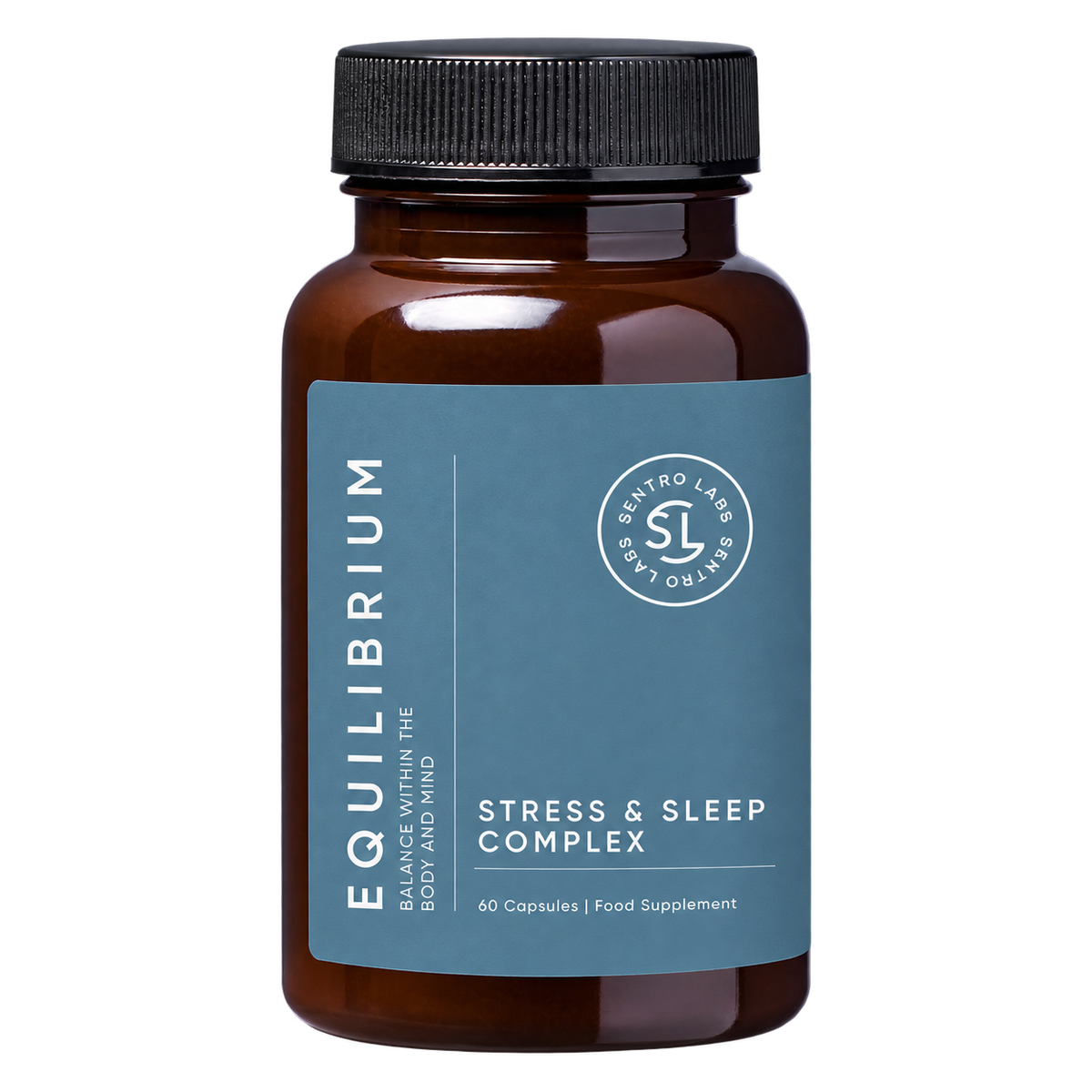
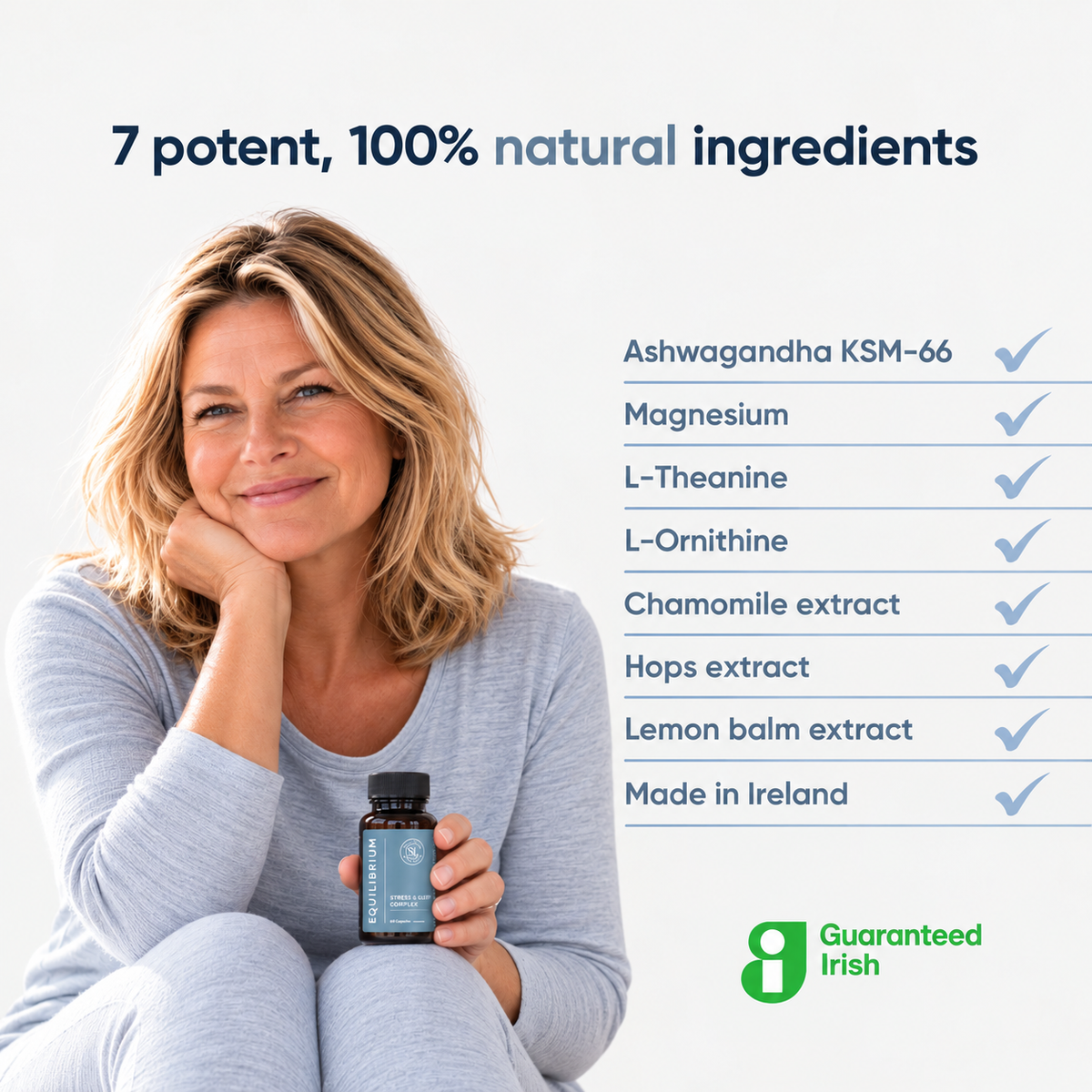
The form matters a lot, and this is something I was very deliberate about when developing Equilibrium. I specifically chose KSM-66 ashwagandha — one of the most rigorously studied ashwagandha extracts available, with over 20 clinical trials backing it. In a 60-day double-blind, placebo-controlled study, participants taking 300mg of KSM-66 twice daily showed a 27.9% reduction in serum cortisol levels. Separate research has shown it can also shorten sleep onset time by approximately 35%.
Equilibrium pairs the KSM-66 with Magnesium Glycinate and L-Theanine. Magnesium plays a direct role in producing GABA — the brain's primary calming neurotransmitter — which helps quiet the nervous system during sleep. L-Theanine, an amino acid found in green tea, promotes alpha brain wave activity associated with calm alertness, without causing sedation. Together, these three ingredients address both the stress-hormone side and the sleep-architecture side of the 3am problem.
I'd suggest taking Equilibrium around 45–60 minutes before bed, consistently, for at least four to six weeks. Adaptogens are not overnight fixes — they work by gradually recalibrating your stress response. Give them the time they need.
What practical steps can I take to stop waking at 3am?
Supplements work best alongside some foundational changes. Here's what the evidence — and my own experience — supports most:
- Stabilise your blood sugar in the evening. Avoid high-sugar foods, refined carbohydrates, and alcohol close to bedtime. A small protein-based snack before bed — a handful of almonds, a spoon of nut butter — can help prevent the nocturnal glucose dip that triggers a cortisol spike at 3am.
- Create a proper wind-down window. Bright light, upsetting news, and stressful conversations all raise cortisol. A consistent 20–30 minute wind-down routine before bed signals to your nervous system that it's safe to let go. This isn't fluffy advice — it's how you shift cortisol before it can disrupt your sleep architecture.
- Fix your wake time first. This is the one most people skip. Waking at the same time every day — including weekends — anchors your Cortisol Awakening Response to the right hour. Within a few weeks, it starts to shift that premature cortisol surge back to where it belongs.
- Rethink alcohol as a sleep aid. Alcohol may help you fall asleep faster, but it suppresses REM sleep and causes blood glucose fluctuations that frequently cause waking in the second half of the night. If 3am is your problem and you're drinking regularly in the evening, this is almost certainly a contributing factor.
- Take your stress load seriously. If you are under significant chronic stress, no supplement can fully compensate. Stress management — exercise, therapy, better boundaries, whatever form that takes for you — is the upstream fix that everything else builds on.
If you're also dealing with racing thoughts that won't quiet when you get into bed, I wrote about that specifically here: How to Stop Racing Thoughts at Night: What the Science Says.
And if you want to understand more about how cortisol builds up during the day and what you can do before it disrupts your sleep, this post goes deeper: Cortisol and Stress: What's Actually Happening in Your Body.
Frequently asked questions
Why do I wake up at exactly 3am every night?
The 3am wake-up is typically linked to a premature cortisol surge — your stress hormone begins its natural morning rise earlier than it should, pulling you out of lighter sleep stages. Blood sugar dips in the early hours can also trigger this same response. It's common enough to have a clinical name: Early Morning Awakening Syndrome, which affects an estimated 15–20% of adults.
Is waking up at 3am a sign of anxiety?
It can be. Anxiety elevates baseline cortisol levels, which can dysregulate the Cortisol Awakening Response and cause you to wake in the early hours. You don't need clinical anxiety for this to happen — chronic low-grade stress is often enough to tip the balance.
Does ashwagandha help with 3am wake-ups?
Yes, for many people. KSM-66 ashwagandha — the clinically studied extract — has been shown to reduce serum cortisol by up to 27.9% over 60 days by working on the HPA axis that regulates your cortisol rhythm. Results typically take 4–6 weeks of consistent daily use.
What should I eat to avoid waking up at 3am?
Avoid high-sugar foods, refined carbohydrates, and alcohol in the evening, as these can cause blood glucose to drop in the early hours, triggering a cortisol release that wakes you. A small protein-rich snack before bed — nuts, a boiled egg, a little cheese — can help keep blood sugar stable through the night.
How long does it take to fix a cortisol-driven sleep problem?
With consistent lifestyle changes and the right supplementation, most people notice real improvement within 4–8 weeks. Adaptogens like KSM-66 ashwagandha work by gradually recalibrating your stress response rather than sedating you — so they need time. The lifestyle factors (consistent wake time, blood sugar stability, alcohol reduction) can start making a difference within 1–2 weeks.
---
If you recognise yourself in any of this — the 3am ceiling stare, the racing thoughts, the morning exhaustion despite spending eight hours in bed — I want you to know it's not in your head, and you're not broken. There is a biological explanation, and for most people, it responds well to the right support. That's exactly what I had in mind when I put Equilibrium together. I hope it helps the way it helped me.
This article is for informational purposes only and does not constitute medical advice. Please consult your GP if you are experiencing persistent sleep difficulties.
Shop the products mentioned:
- Equilibrium – Stress & Sleep Complex (Ashwagandha KSM-66, Magnesium Glycinate, L-Theanine, Active B-Complex)
- Magnesium Bisglycinate – Sleep & nervous system support

















Share:
Why High-Protein Diets are Essential for Menopause & Perimenopause
Does Vitamin D Affect Sleep? What Every Irish Adult Needs to Know