




I was chatting with a group of women a while back, and we got onto the subject of sleep. Every single person at that table had the same story — lying awake in the dark with a mind that wouldn't stop, or waking at 2am and not getting back off until 5. And every single one of them had a husband or partner who was out like a light within minutes.
It's not in your head. According to the 2025 Healthy Ireland Survey, women in Ireland consistently report lower sleep quality than men — and the gap is real, consistent, and scientifically grounded. There is a specific biological reason for this. And once you understand it, you can actually start doing something about it.
Why do women sleep worse than men?
Women are approximately 40% more likely to experience insomnia than men, and the primary reason is hormonal. Research published in Frontiers in Sleep confirms that the female hormonal cycle creates sleep disruptions that men's physiology simply doesn't experience. It's not about being anxious, or worrying more, or being a lighter sleeper by nature — it's about a monthly hormonal rhythm that directly affects the brain's ability to wind down and stay asleep.
From puberty onwards, two key hormones — oestrogen and progesterone — shape the quality and architecture of women's sleep. Oestrogen promotes deeper, more restorative rest and helps regulate the neurotransmitters serotonin and GABA. Progesterone has a naturally calming, sedative effect. Both are essential for good sleep. But unlike men's relatively stable hormone levels, women's oestrogen and progesterone rise and fall dramatically throughout the month — and those fluctuations are felt most acutely at night.
The 2025 Healthy Ireland Survey confirmed this nationally: Irish women rate their sleep quality lower than men, and the numbers reflect what so many of us already know from lived experience.
How do hormones disrupt women's sleep throughout the month?
The clearest example is in the week before your period. In the luteal phase — roughly the two weeks after ovulation — progesterone rises, then drops sharply as menstruation approaches. When it falls, it takes with it the calm, sedative effect it normally provides. Oestrogen follows. And with lower oestrogen comes a drop in serotonin and GABA, the brain's two key calming neurotransmitters.
This is why so many women find sleep hardest in the days before their period. Research shows that women with PMS have significantly more insomnia symptoms and unrefreshing sleep than women without. Studies also show that women with irregular menstrual cycles have a twofold higher risk of insomnia overall.
Oestrogen also plays a role in body temperature regulation during sleep. Lower oestrogen means less effective temperature control at night — which explains those restless, too-warm nights that cluster at specific points in the month.
This isn't random. Your sleep doesn't just vary for no reason. It tracks your cycle, and understanding that is the first step to working with your body rather than against it.
What supplements actually help women sleep better?
Here's what I've learned after researching this extensively and building the Sentro Labs range — the ingredients that actually have clinical evidence behind them for women's sleep.
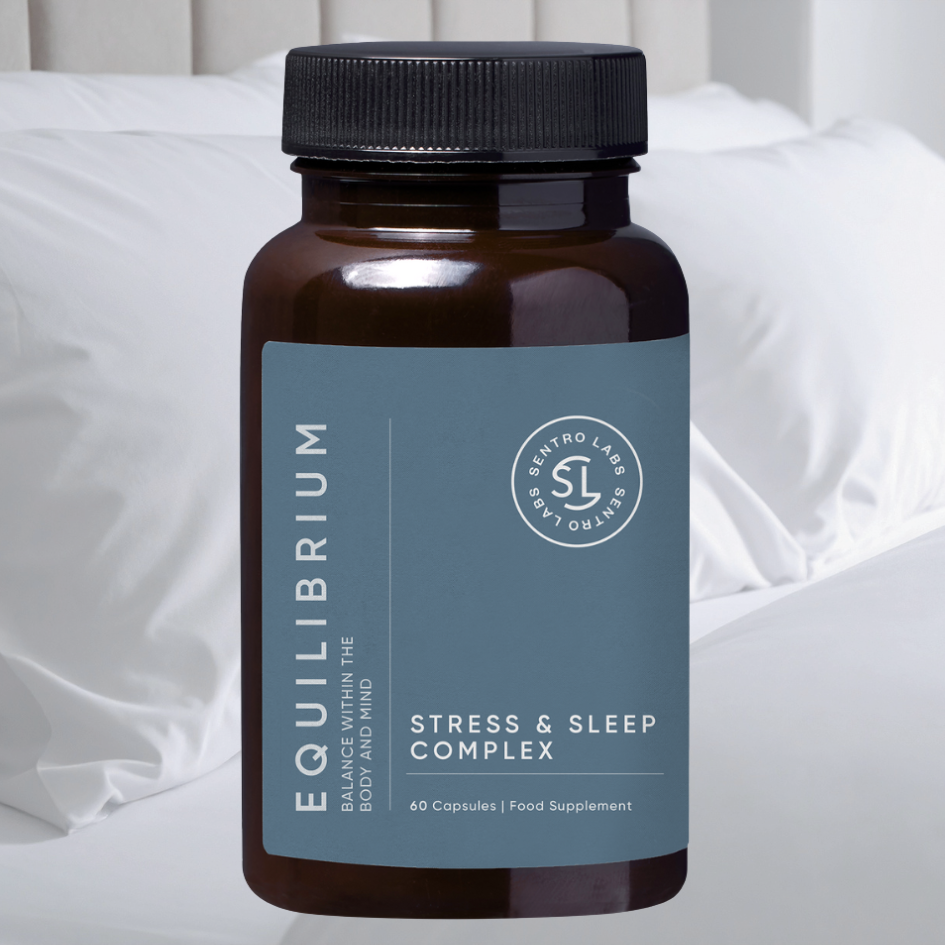
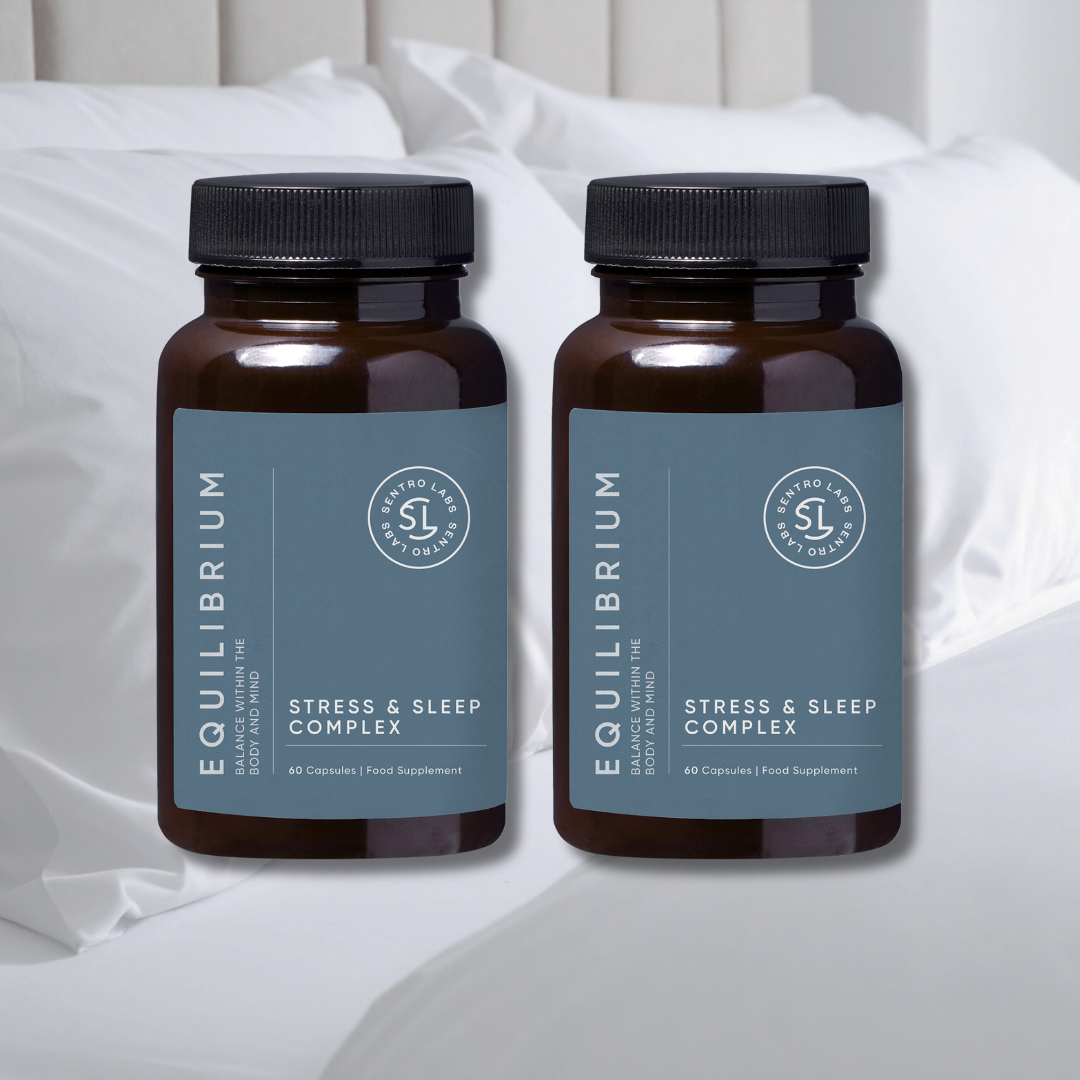
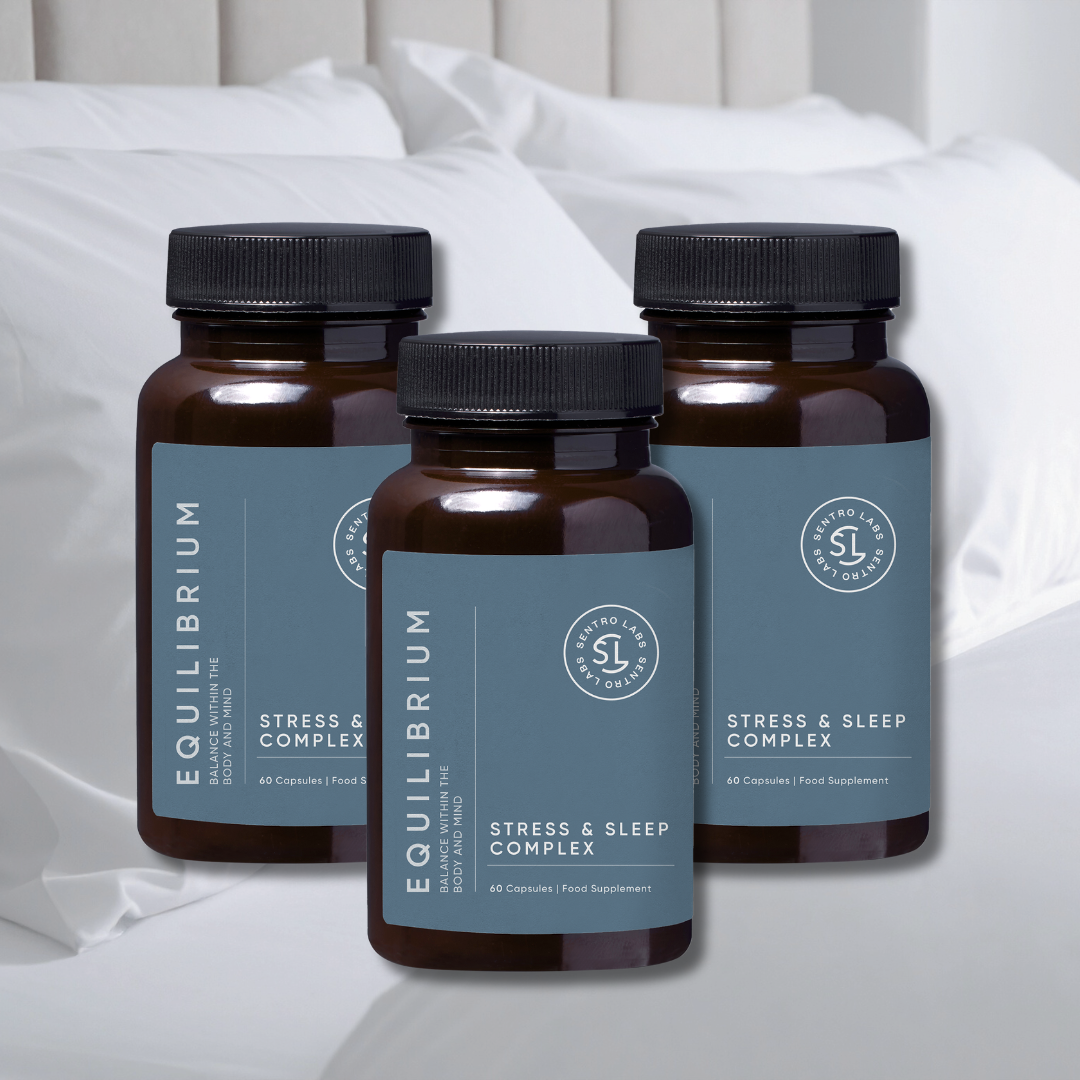
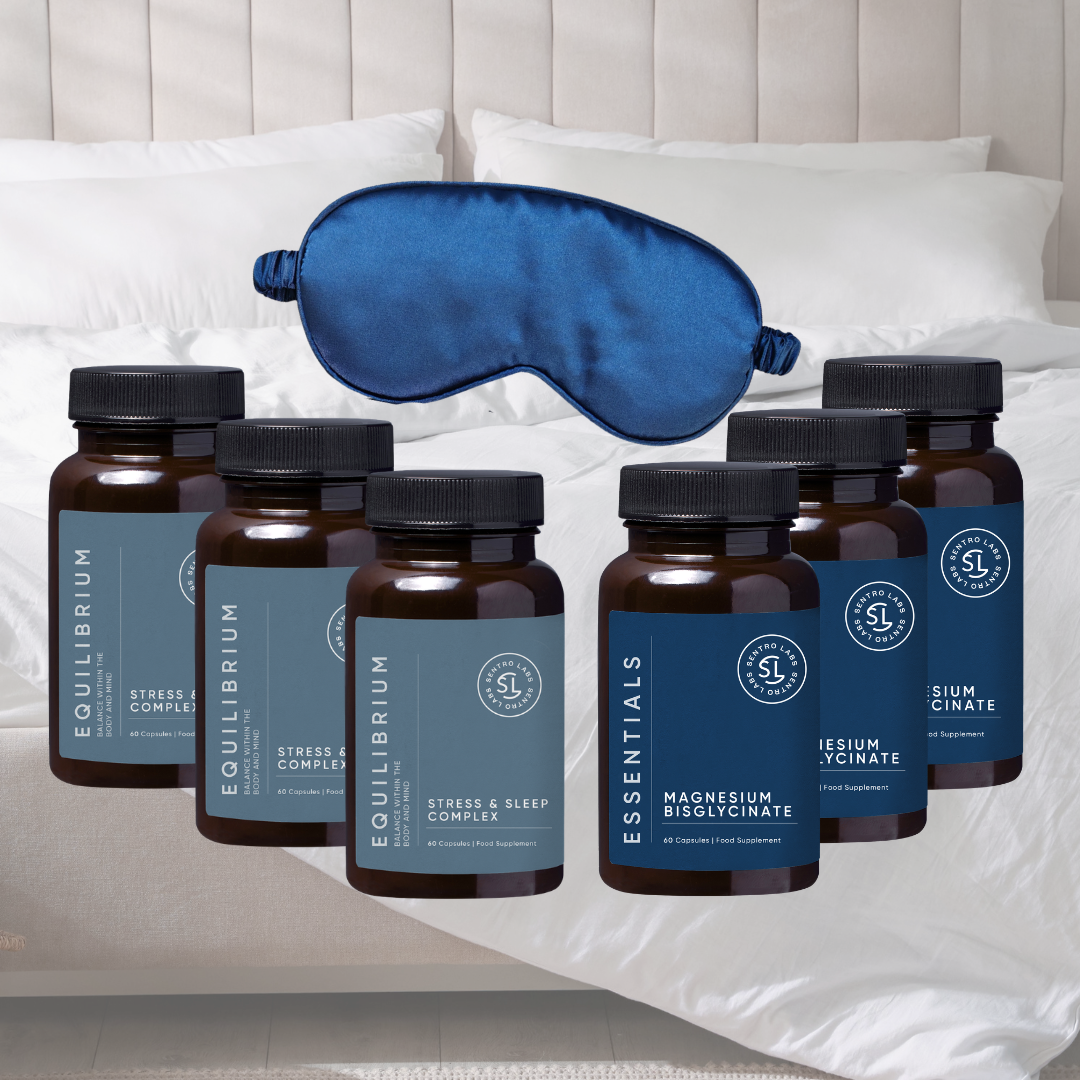
The one I recommend most is Equilibrium, our Stress & Sleep Complex. It's what I take myself, and here's why it works so well for women specifically:
Ashwagandha KSM-66 — the clinically studied, root-only extract — is one of the best-researched adaptogens for cortisol reduction and sleep quality. When oestrogen and progesterone drop, cortisol regulation becomes less stable, and that's often what's behind the 2am wake-up with a racing mind. Ashwagandha works upstream, reducing cortisol so the brain can actually wind down. A 2025 randomised trial found participants taking KSM-66 ashwagandha experienced meaningfully better sleep quality and fewer night-time awakenings than placebo after 8 weeks.
L-Theanine (also in Equilibrium) is an amino acid that promotes alpha brainwave activity — the state associated with calm alertness and relaxed readiness for sleep. It works directly on GABA receptors, compensating for the natural GABA-calming effect that progesterone normally provides. A 2023 review found L-Theanine supports sleep onset, duration, and quality, particularly for people whose sleep is disrupted by an overactive mind — which is exactly what most women describe.
Equilibrium also contains Magnesium Glycinate and an Active B-Complex — magnesium for further GABA support, and B vitamins to fuel the melatonin production pathway. It's a genuinely complete formula for women whose sleep is being undermined by stress hormones and hormonal fluctuation.
For standalone magnesium support, our Magnesium Bisglycinate is the most bioavailable form — a 2024 RCT found it meaningfully improved insomnia severity compared to placebo. It works well alongside Equilibrium or on its own.
If your sleep feels strongly tied to your cycle — specifically the week before your period — Harmony, our Female Balance Blend, adds Lion's Mane, D3+K2, B6, B12, Zinc, and Selenium. B6 is essential for converting tryptophan into serotonin and then melatonin, and D3 deficiency (very common in Ireland) is independently linked to poor sleep quality.
What else can women do to improve their sleep tonight?
Supplements work best alongside good habits. Here's what the evidence actually supports:
- Track your cycle. When you know your worst sleep nights cluster in the pre-menstrual phase, you can plan for them: take magnesium and Equilibrium consistently during that window, reduce alcohol (it suppresses progesterone further, which is the last thing you need when it's already dropping), and give yourself more grace around earlier bedtimes.
- Cool your room. Women are more sensitive to temperature disruption during sleep due to hormonal effects on thermoregulation. A room temperature of 16–18°C is optimal. A fan or a lighter duvet can make a real difference.
- Get morning light within an hour of waking. This anchors your circadian rhythm and helps regulate melatonin production later in the day. It's free, takes five minutes, and the research consistently backs it.
- Keep a consistent wake time. This is the single most powerful sleep habit — more impactful than what time you go to bed. Your sleep drive builds in response to time awake, and consistency is what locks it in.
If stress is also a factor — a very common combination — I wrote about the cortisol and sleep connection in detail here: The Link Between Stress and Poor Sleep (and How to Fix It).
And if you've noticed your sleep shifting in your 40s, Why Does Sleep Get Worse After 40? covers the hormonal picture in more detail.
Frequently Asked Questions
Why can't I sleep the week before my period?
In the days leading up to your period, both oestrogen and progesterone drop sharply. These hormones help regulate GABA and serotonin — the brain's calming neurotransmitters. When they fall, the nervous system finds it harder to switch off. Women with PMS are significantly more likely to report insomnia and unrefreshing sleep in this phase, and this pattern is well-documented in published research.
What is the best supplement for women's sleep in Ireland?
Equilibrium by Sentro Labs is our hero sleep supplement — it combines Ashwagandha KSM-66 (clinically shown to reduce cortisol and improve sleep quality), L-Theanine (which calms an overactive mind and supports GABA function), Magnesium Glycinate, and Active B-Complex. For women whose sleep is disrupted by hormonal fluctuation, this combination addresses the root cause rather than just the symptom. Explore Equilibrium →
Does magnesium help women sleep better?
Yes — particularly Magnesium Bisglycinate, the most absorbable form. Magnesium activates GABA receptors, which quiets neural overactivity and makes it easier to fall and stay asleep. A 2024 randomised controlled trial found meaningful improvements in insomnia severity in adults who supplemented with magnesium bisglycinate compared to placebo. It's included in Equilibrium and also available as our standalone Magnesium Bisglycinate.
Why do I sleep better some nights of the month than others?
This is your hormonal cycle at work. In the follicular phase after your period, rising oestrogen tends to support better sleep. After ovulation, progesterone rises and initially improves rest — but as both hormones drop in the pre-menstrual phase, sleep typically deteriorates. Tracking your cycle helps you predict and prepare for these shifts rather than being caught off guard.
Can low vitamin D affect women's sleep in Ireland?
It can. Vitamin D receptors are found in the areas of the brain that regulate sleep, and low vitamin D has been linked to shorter sleep duration and poorer quality. In Ireland, where sunlight is limited for much of the year, deficiency is extremely common — making D3 supplementation particularly relevant for both sleep quality and mood support.
If any of this resonates, I want you to know: you are not imagining it, you're not just bad at sleeping, and you don't have to put up with it. Your body is managing a complex hormonal cycle every single month, and the nutritional support that helps sleep during that cycle is real and specific.
Equilibrium is where I'd start — it's what I take myself, and it was built precisely for this.
This article is for informational purposes only and does not constitute medical advice. Please consult your GP if you are experiencing persistent sleep difficulties.
Explore Sentro Labs Sleep Products:
- Equilibrium — Stress & Sleep Complex — Ashwagandha KSM-66, L-Theanine, Magnesium Glycinate, Active B-Complex
- Magnesium Bisglycinate — Sleep & nervous system support
- Harmony — Female Balance Blend — Lion's Mane, Magnesium Bisglycinate, D3+K2, B6, B12, Zinc, Selenium





Share:
What Happens to Your Body When You Don't Get Enough Sleep?
Why Can't I Sleep During Perimenopause? What's Really Happening (and What Helps)