



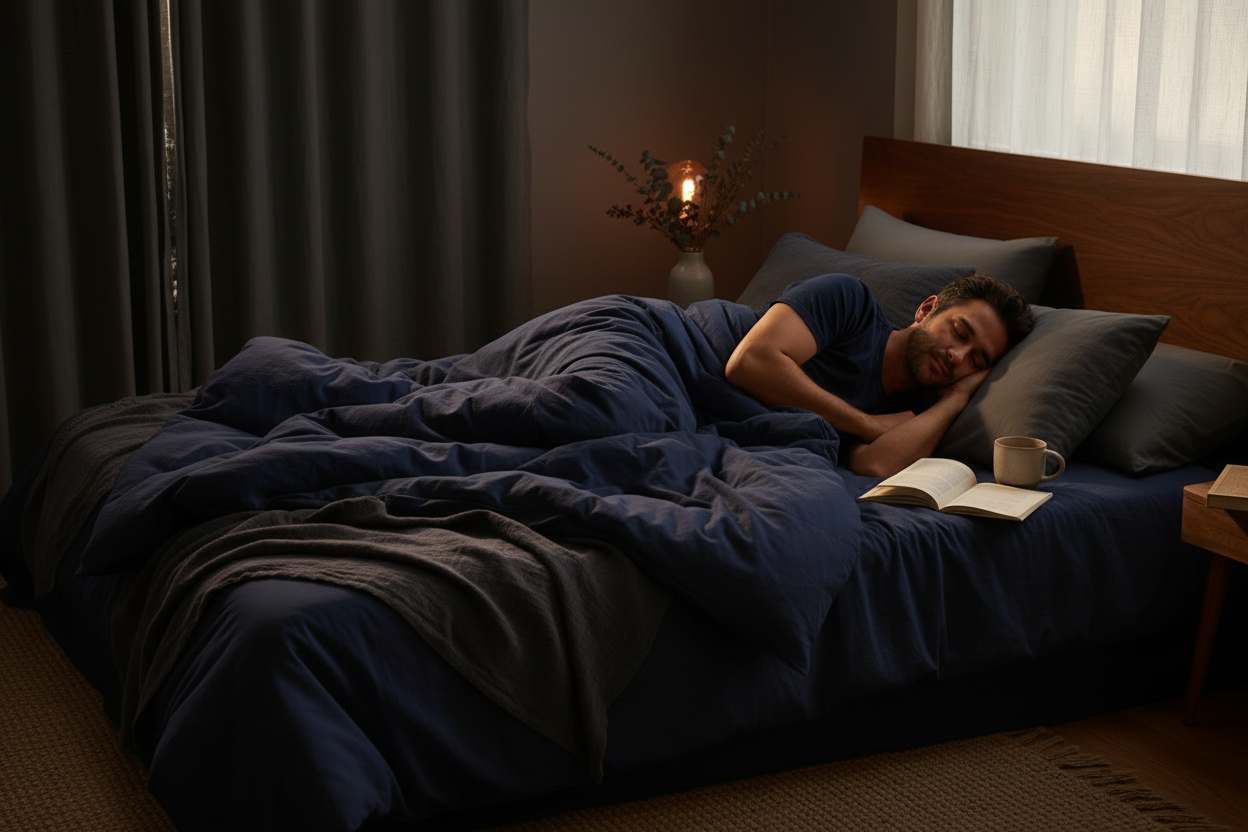
I spent years running on five or six hours of sleep, genuinely convinced I was fine. I wasn't. I was irritable, foggy, craving sugar by 3pm, catching every cold going — but I thought that was just normal life. It took me a long time to understand that those weren't separate problems. They had the same root cause.
If you're reading this feeling exhausted, you are in very good company. According to the Healthy Ireland Survey published in November 2025, Irish people average just 6.9 hours of sleep per night — and research by Laya Healthcare found that almost 80% of us are sleep deprived. That's not just tired. That's chronically, measurably short-changing your body every single night. Here's what that actually means for your health.
What actually happens to your body when you're sleep deprived?
Sleep deprivation causes measurable physical harm — and the effects begin much faster than most people realise. Even a single night of poor sleep raises your cortisol and adrenaline levels, increases inflammatory markers in your blood, and impairs your cognitive function and emotional regulation.
When you sleep, your body is far from passive. It's actively repairing tissue, consolidating memories, calibrating your immune system, and balancing your hormones. Cut that process short night after night and the consequences accumulate: elevated blood pressure, disrupted blood sugar regulation, a weakened immune response, and a significantly increased risk of weight gain.
Research from the National Institutes of Health shows that sleep-deprived adults have measurably lower levels of leptin — the hormone that signals fullness — and higher levels of ghrelin, the hormone that drives hunger. This is why you're reaching for biscuits at 11pm after a bad night. It's not weakness. It's biology working exactly as designed, just in the wrong direction.
The long-term picture is more serious. Persistent poor sleep is now linked to an elevated risk of type 2 diabetes, cardiovascular disease, depression, and early cognitive decline. Your sleep debt doesn't disappear quietly — it compounds.
Why does poor sleep make stress and anxiety so much worse?
Poor sleep and stress feed each other in a self-reinforcing loop — and this is something I hear about constantly from people who reach out to tell me why they started taking Equilibrium.
Here's the mechanism: when you don't sleep well, your cortisol levels remain elevated into the following day. Cortisol is your primary stress hormone — useful in short bursts, deeply disruptive when chronically elevated. High daytime cortisol keeps your nervous system in a low-grade "threat" state: more reactive to everyday stressors, less able to concentrate, and more likely to lie awake worrying again the following night.
Research published in the journal Psychological Science shows that even partial sleep loss significantly amplifies emotional reactions to stressors that would otherwise feel manageable. Your brain literally becomes less able to regulate its response to negative stimuli when you're underslept.
A striking 49% of people in Ireland report waking up feeling tired almost every day — ranking us in the top five globally. If that sounds familiar, the cortisol-sleep connection is often a major part of why. I explored this in more detail here: What's the Connection Between Cortisol and Sleep?
What natural supplements actually support better sleep quality?
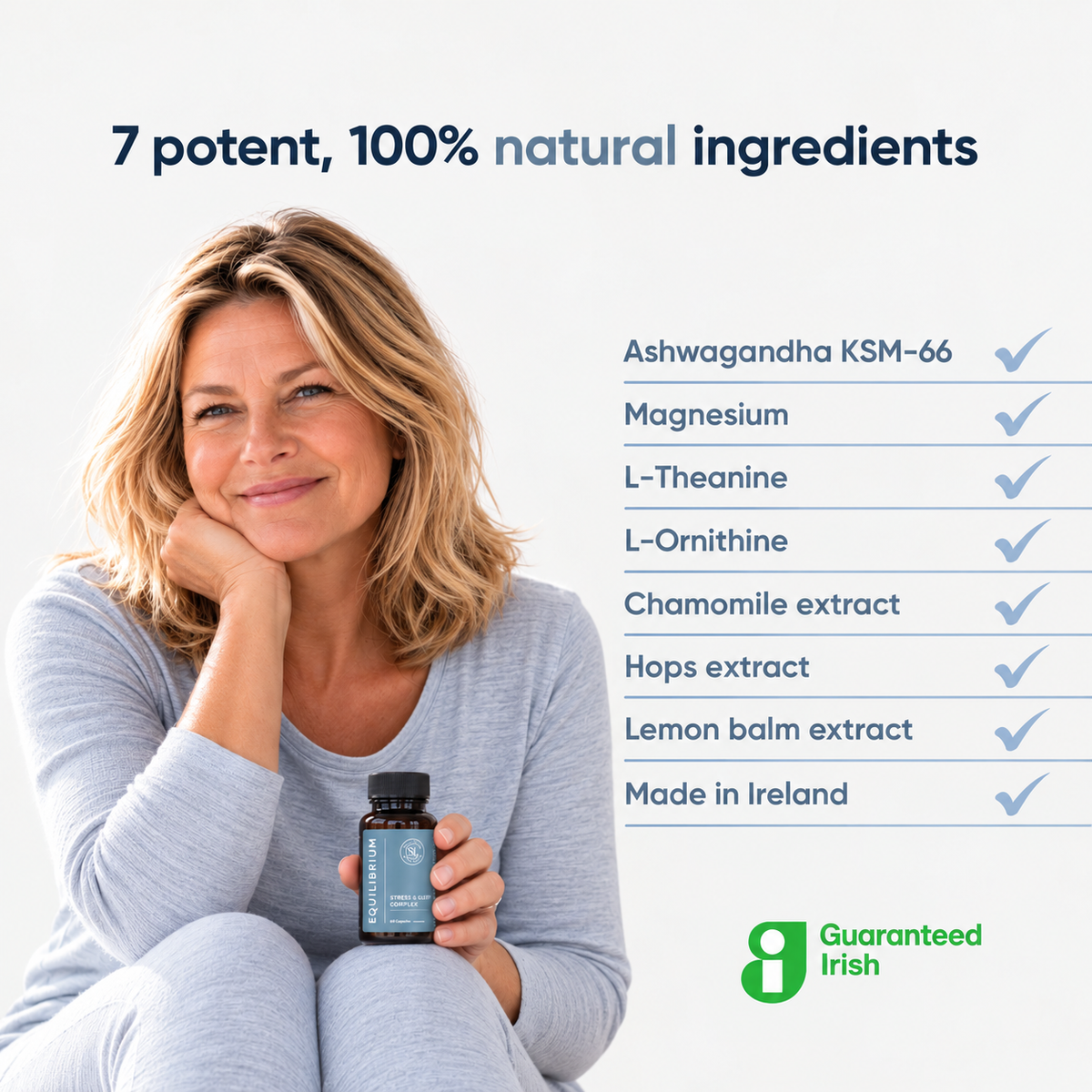
Three ingredients are consistently supported by clinical evidence for sleep: KSM-66 Ashwagandha, Magnesium Bisglycinate, and L-Theanine — and here's why I chose each of them for Equilibrium.
Ashwagandha KSM-66 is the most clinically studied form of ashwagandha, standardised to a minimum of 5% withanolides. Multiple human trials show it significantly reduces cortisol levels and improves sleep quality and duration. In a double-blind, placebo-controlled study, participants taking 600mg of KSM-66 daily reported statistically significant improvements in sleep quality, sleep onset latency, and mental alertness on waking — compared to placebo. The benefits are most pronounced at the 8-week mark, so consistency matters.
Magnesium Bisglycinate (also known as Magnesium Glycinate) is one of the most bioavailable forms of magnesium — meaning your body can actually absorb and use it, unlike cheaper forms such as magnesium oxide. Magnesium plays a direct role in regulating GABA, the neurotransmitter responsible for quieting your nervous system and preparing your brain for sleep. Magnesium deficiency is extremely common in Ireland, and it's one of the first things I address when people tell me they can't switch off at night.
L-Theanine is an amino acid found naturally in green tea that promotes calm alertness without sedation. Taken in the evening, it supports the transition from the stimulated, task-focused state most of us are in all day to the quieter, more receptive state the brain needs for sleep onset.
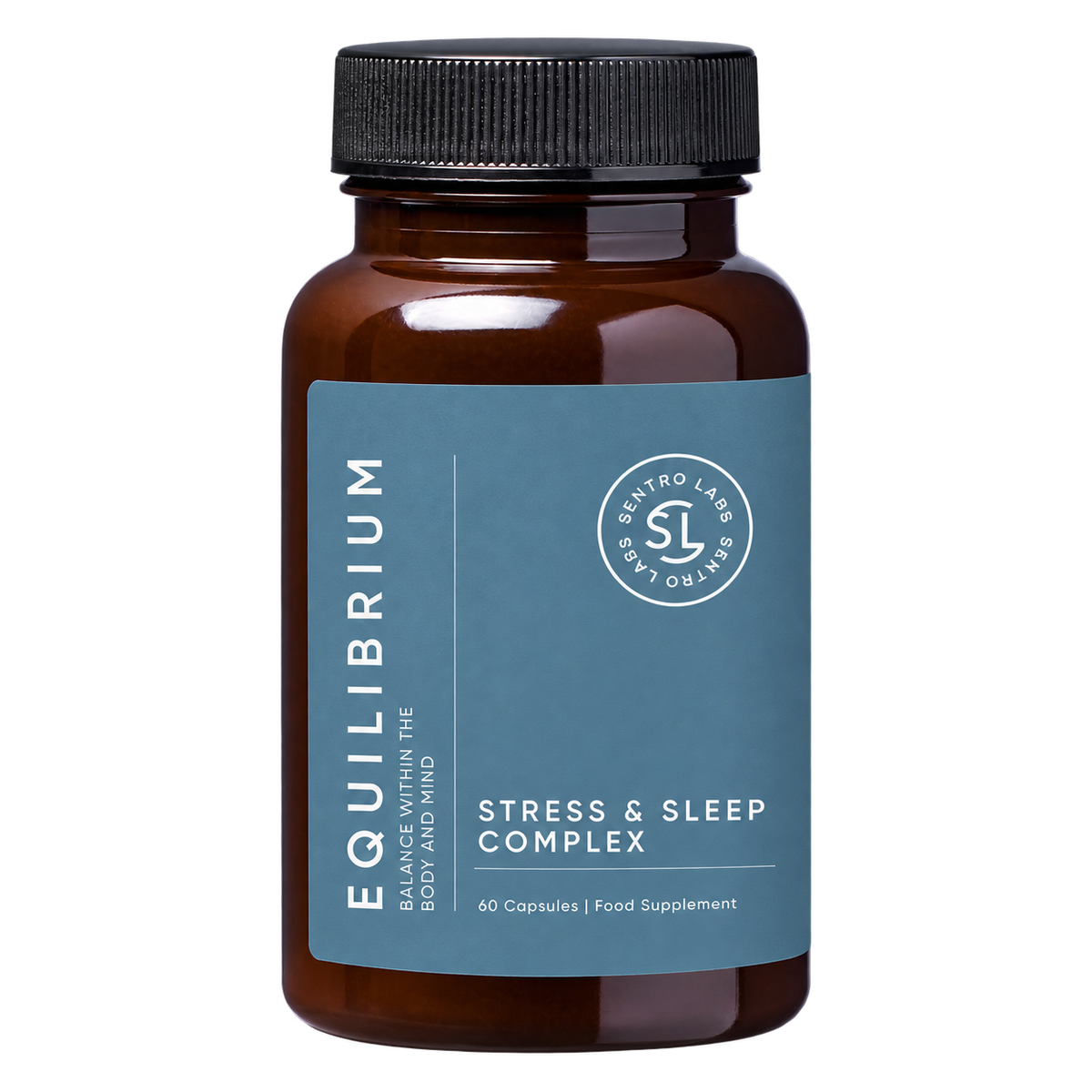
All three are in Equilibrium, alongside an Active B-Complex. If you'd prefer to start with magnesium on its own, our Magnesium Bisglycinate is consistently one of our most popular products — especially for people who struggle to wind down at night.
What simple daily habits actually make a real difference to your sleep?
Supplements support the process — but these evidence-based habits do the heavy lifting.
- Keep your wake time consistent, even at weekends. Your circadian rhythm is anchored by timing, not just duration. Sleeping in on Sunday disrupts Monday's sleep more than almost anything else.
- Cut caffeine after 1pm. Caffeine has a half-life of 5–6 hours. A 3pm coffee still has half its stimulant effect circulating at 9pm — working directly against your body's wind-down process.
- Get outside in the morning. Even on a grey Irish morning, natural light within 30 minutes of waking anchors your circadian rhythm and sets the timer on your melatonin production later that evening.
- Build a 30–45 minute wind-down buffer before bed. Your nervous system doesn't shift from full alert to sleep-ready instantly. Lower the lights, step away from screens, and give your brain the signal that the day is ending.
- Take magnesium in the evening. If you're using Magnesium Bisglycinate or Equilibrium, evening is the optimal time — magnesium's calming effect on the nervous system is most useful as you're winding down for the night.
Frequently Asked Questions
What are the main signs of sleep deprivation?
The most common signs are persistent daytime fatigue, difficulty concentrating, mood irritability, increased appetite (especially for sugar and carbohydrates), frequent illness, and waking up feeling unrefreshed. If you're experiencing several of these on a regular basis, your sleep is likely insufficient or poor quality.
How many hours of sleep do adults actually need?
The NHS and the Sleep Foundation both recommend 7–9 hours for most adults. Irish data shows we're averaging 6.9 hours — just below the minimum recommended amount. Quality matters as much as quantity: six hours of deep, uninterrupted sleep may leave you more rested than eight hours of fragmented sleep.
Can you catch up on lost sleep at weekends?
Partly — but you can't fully recover from accumulated sleep debt. A 2019 study in Current Biology found that sleeping in at weekends helped reduce some metabolic effects of chronic sleep restriction, but didn't fully reverse them — and it disrupted the following week's sleep patterns. Consistency beats occasional long sleep every time.
Does magnesium really help you sleep better?
Yes, for most people — particularly those with low magnesium levels, which is very common. Magnesium Bisglycinate specifically supports GABA receptor function (the calming neurotransmitter) and has been shown in clinical studies to improve sleep onset, duration, and sleep efficiency. Most people notice a meaningful difference after 2–4 weeks of consistent use.
What's the best natural supplement for sleep in Ireland?
It depends on your root cause. If stress and elevated cortisol are keeping you awake, KSM-66 Ashwagandha and L-Theanine are the most clinically supported options. If magnesium deficiency is a factor — very common in Ireland — Magnesium Bisglycinate is an excellent starting point. Equilibrium combines all three, which is why it tends to work well for people dealing with both stress and disrupted sleep.
—
If you've been living with poor sleep for so long that it feels like just the way things are — I want you to know it doesn't have to be. I know how much better everything feels on the other side of it. The fog lifts. The patience comes back. The 3pm wall disappears.
You don't need to overhaul everything at once. Pick one thing — a consistent wake time, magnesium in the evening, cutting caffeine off earlier — and build from there. And if you'd like a bit of support along the way, Equilibrium was designed with exactly this in mind.
This article is for informational purposes only and does not constitute medical advice. Please consult your GP if you are experiencing persistent sleep difficulties.
Shop the products mentioned in this article:












Share:
From Running on Empty to Running the Show
Why Do Women Sleep Worse Than Men? The Truth About Female Sleep and Hormones