




📚 Read time: 5 minutes
We didn't start Sentro Labs because we love the supplement industry. We started it because we were running out of road. Running a business, raising a young family, trying to stay on top of everything — and finding that the harder we pushed, the more frayed everything felt. Not dramatic burnout. Just that constant low-grade hum of being on. Always slightly tense. Never fully recovered. Going to bed tired and waking up, somehow, even more wired. Sound familiar? If you're over 40 and managing any combination of work pressure, family pressure, and the general background noise of modern life, you've almost certainly felt it. And if you've ever googled "why am I so tired but can't sleep," you've probably already met the word cortisol. Here's what's actually going on — and what the evidence says helps.
What is cortisol, and why does it matter?
Cortisol is your body's primary stress hormone. It's not a villain — it's essential. It gets you out of bed in the morning. It gives you the edge you need under pressure. In short, controlled bursts, it does exactly what it's supposed to do. The problem is that most people over 40 aren't getting short, controlled bursts. They're getting a slow, persistent drip that never fully switches off. Here's the basic mechanism. When you perceive a threat — a deadline, a difficult conversation, a near-miss in traffic — your hypothalamus signals your pituitary gland, which signals your adrenal glands to release cortisol. Your body goes into high alert. Heart rate up, breathing quickened, blood sugar elevated. You're ready. When the threat passes, cortisol is supposed to fall back down. Your parasympathetic nervous system — the brake — kicks in and brings things back to normal. The trouble with modern stress is that there's no clear "threat passed" moment. Deadlines become new deadlines. Emails arrive on Sunday evenings. The nervous system never quite gets the all clear. And chronically elevated cortisol has consequences — disrupted sleep, stubborn weight gain, heightened anxiety, suppressed immunity, poor concentration. Your body running a stress response it can never complete.
Why over-40s feel this more acutely
There's a reason this hits harder in your forties. Your hormonal buffer is thinner. For women, perimenopause means oestrogen and progesterone — which both help modulate the stress response — start to fluctuate unpredictably. Cortisol fills the gap and then some. If that resonates, we wrote specifically about this in our piece on KSM-66 ashwagandha and perimenopause — the connection between hormonal shifts and heightened stress sensitivity is underappreciated and worth reading. For men, declining testosterone makes cortisol's effects more pronounced. The two hormones are in a seesaw relationship — when cortisol stays elevated, testosterone takes the hit. We cover the practical side of that in our post on zinc, testosterone and libido after 40. And for both? The sleep disruption compounds everything else. High cortisol at night means you can't get into the deep restorative sleep where your body actually repairs itself. Less sleep means higher cortisol the next day. The loop runs itself. We broke down the exact mechanism in The Link Between Stress and Poor Sleep (and How to Fix It) — if you're waking at 3am and wondering why, start there.
What the symptoms actually look like
High cortisol doesn't usually announce itself dramatically. It tends to look like: wired but exhausted — tired all day, suddenly alert at bedtime; weight gain around the middle that diet and exercise don't seem to shift; anxiety or low mood that feels disproportionate to what's actually happening; frequent colds and slow recovery from illness; concentration that comes and goes; and a jaw that's clenched by 10am without you noticing. These symptoms can have multiple causes and aren't a self-diagnosis of high cortisol. If they're persistent, talk to your GP. A salivary cortisol test, blood cortisol test, or 24-hour urine test can give you an actual picture. But if you're ticking several of those boxes and can't point to a specific cause, the stress response is worth investigating.
What actually helps (based on evidence, not trends)
The cortisol curve matters more than the bedtime routine. Most sleep advice focuses on what you do at 10pm. The research suggests you should be thinking about what you do at 10am. Cortisol is supposed to follow a daily curve — high in the morning, falling through the day, low at night so melatonin can rise. If your daytime stress keeps that curve flat, no amount of chamomile tea will fix your sleep. We go deep on this in What's the Connection Between Cortisol and Sleep?
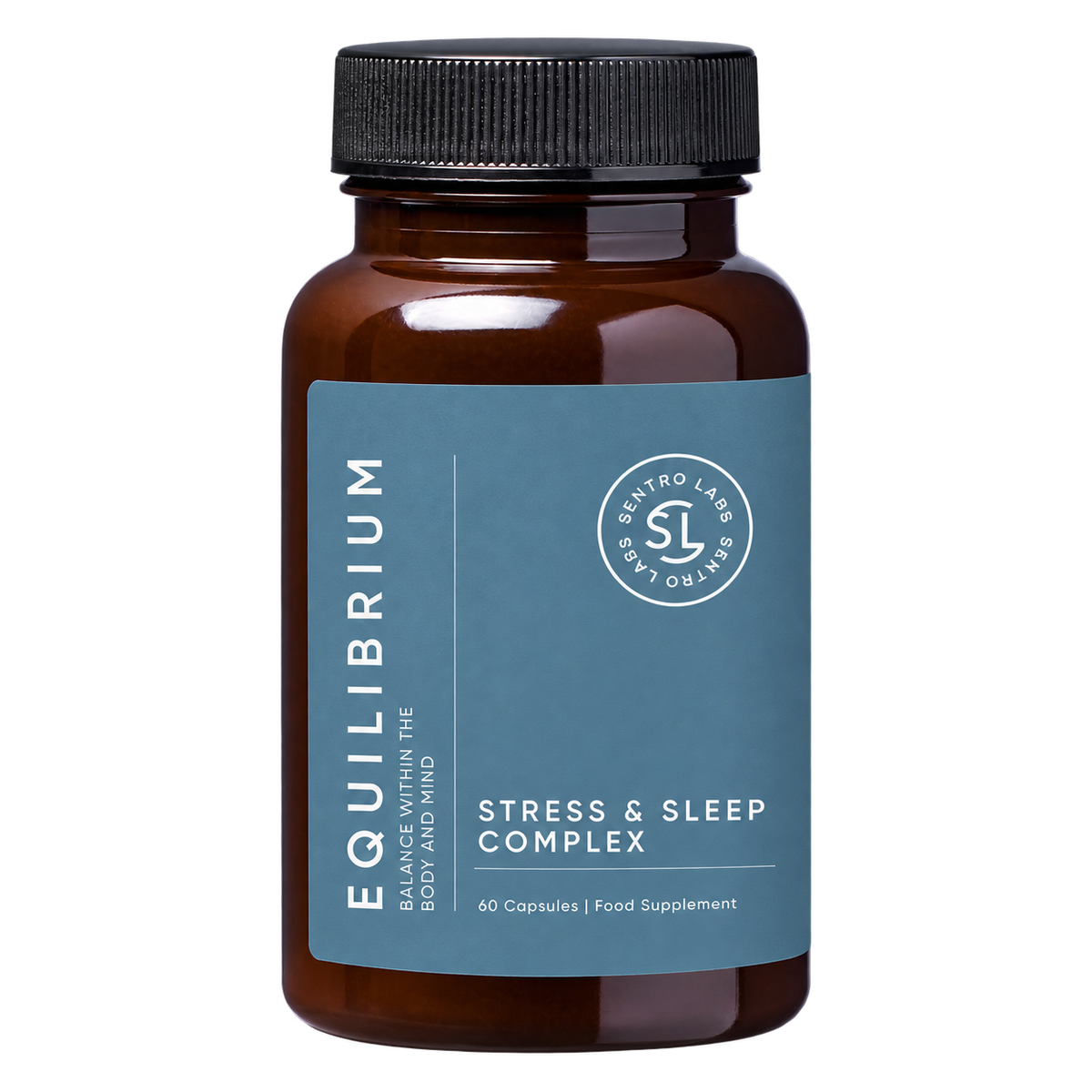
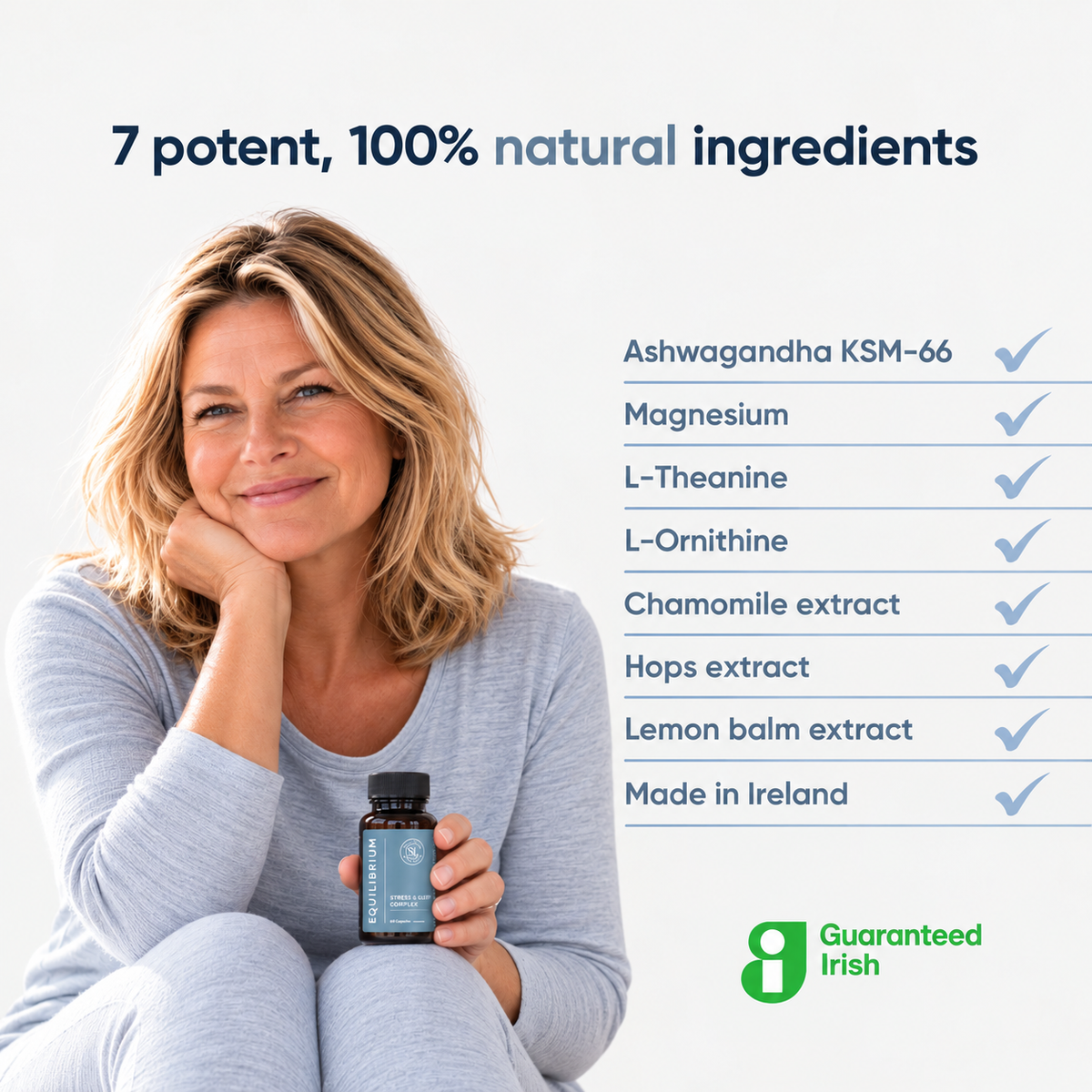
Ashwagandha — specifically KSM-66, at the right dose. This is where we put our money. Literally — it's the anchor ingredient in Equilibrium. Ashwagandha is an adaptogen — it helps your body regulate its stress response rather than just masking symptoms. In well-designed human trials on chronically stressed adults, KSM-66 (the standardised, research-backed root extract) has been shown to support healthy cortisol levels over 8–12 weeks. The effect people notice first isn't usually dramatic calm. It's more that the edge comes off. Less reactive. Easier to fall asleep. Fewer 3am wake-ups. It doesn't work overnight — the studies that show results run for 8 weeks minimum. That was our experience too. For the full story of why we built Equilibrium and what actually changed for us, read Stress, Sleep and Ashwagandha: Why We Built Equilibrium.
Magnesium — the right form, not the cheap version. Magnesium is directly involved in the nervous system pathways that govern relaxation and sleep onset. Deficiency is extremely common in adults over 40, and most people who "tried magnesium and it didn't work" were taking a poorly absorbed form. Equilibrium includes magnesium bisglycinate — chosen specifically because the research on sleep and relaxation uses chelated forms, not the oxide you'll find in most supermarket supplements. If you want the full breakdown on why form matters, we wrote it: Which Magnesium Is Best for Sleep?
L-theanine — calm alertness, not sedation. Found naturally in green tea, L-theanine promotes alpha wave activity in the brain — associated with a relaxed but alert state. It's not sedating. It takes the edge off the background hum without dulling you. Equilibrium includes it alongside ashwagandha and magnesium bisglycinate because the three work on different parts of the same system: the stress response, the nervous system, and sleep architecture.
The basics that compound everything else. None of the above replaces consistent exercise, a diet that's not dominated by ultra-processed food, and protecting your sleep environment. These aren't optional extras. Aerobic exercise is one of the most effective cortisol-lowering interventions in the research. Mindfulness and breathing practices have measurable effects on the HPA axis. We focus on supplements because that's what we make — but they work best as part of a wider approach, not instead of one.
Our honest take
We make Equilibrium. We also take Equilibrium. Both of us, every day. That's not a marketing line — it's the reason the formula is what it is. We built it because we were looking for it and couldn't find it done properly. If you're in the loop — working hard, sleeping poorly, feeling like you're running on fumes — the evidence for ashwagandha, magnesium bisglycinate, and L-theanine is solid enough to be worth a genuine trial. Eight weeks, taken consistently. That's the bar.
— Robert & Elaine, Founders, Sentro Labs
A few things worth reading next:
The Link Between Stress and Poor Sleep (and How to Fix It)
What's the Connection Between Cortisol and Sleep?










Share:
Energy + Magnesium Bisglycinate (and why it’s one of our favourites)
Juggling Life, Business, and Wellness